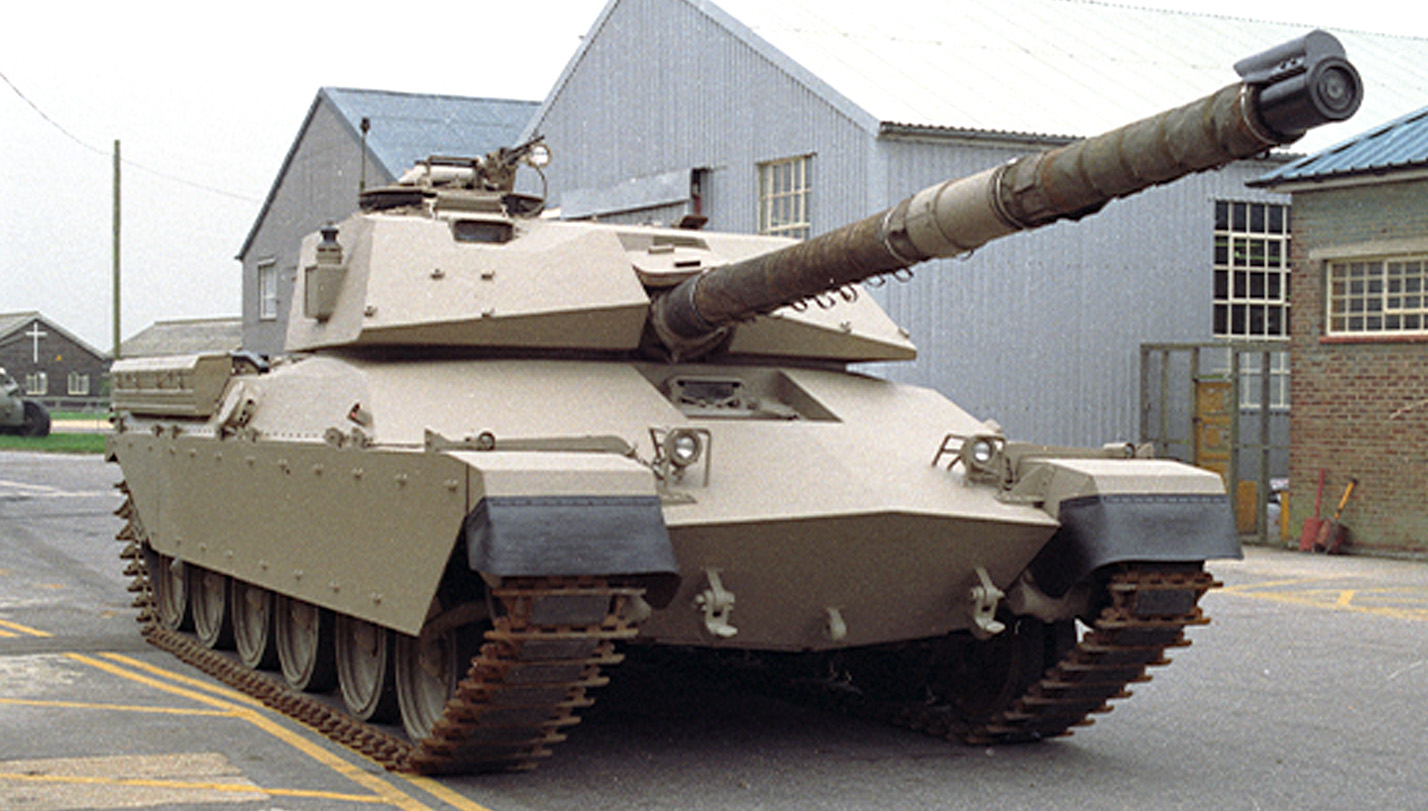
Britain’s Main Battle Tank for twenty years, Chieftain was one of the first true Main Battle Tanks, designed to replace both medium and heavy tanks in front line service.
However it also incorporated a lot of revolutionary design features, some of which did not work as well as expected. For example, in order to reduce height the driver lies in a reclining position and changes gear with his foot. The gun uses a self-combusting, bagged charge in place of a brass cartridge case and the tank is powered by a multi-fuel engine.
The engine was a Leyland design, developed from a pre-war German diesel aircraft engine. It has six vertical cylinders containing twelve opposed pistons, working on the two-stroke principle. Although essentially a diesel it was capable of running on a variety of fuels. The TN12 gearbox, offering six forward speeds and two reverse, includes a triple-differential steering system.
The Tank Museum’s Chieftain Mk11C
Late production Chieftains were continually upgraded. This Mark 11 would have been built as a Mark 5, with an uprated engine, which was subsequently fitted with Improved Fire Control System (IFCS), Thermal Observation and Gunnery System (TOGS) and the additional Stillbrew armour on the turret front and around the driver’s hatch. Chieftain served with the British Army into the early nineties and enjoyed modest success on the export market in the Middle East.
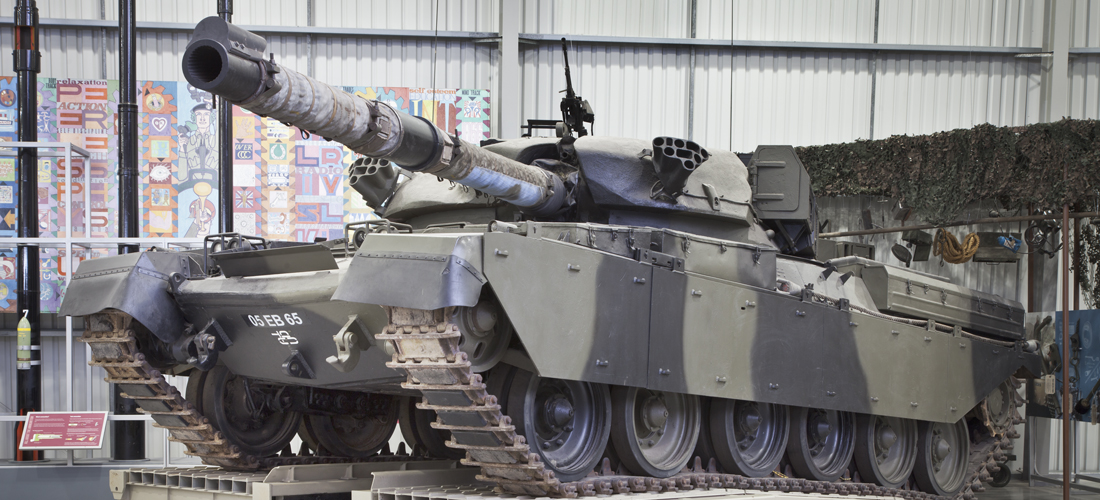
The Tank Museum’s Chieftain Marksman
The Marksman Self Propelled Anti-Aircraft Gun was developed by Marconi Command and Control Systems (now part of BAE Systems) in the late 1980s. It was designed to be able to fit on any tank chassis, and has the ability to traverse a full 360 degrees. The main armament is a pair of 35mm Swiss Oerlikon KDA anti-aircraft guns which have a rate of fire of 18 rounds per second, and have an effective range of around 4,000m. They are aimed with a radar with a range of around 12,000m.
Marksman’s only sale was to Finland, who purchased seven – which they fitted to T-55 chassis, then later moved to the Leopard 2.
Marconi had originally developed the system for the British Army, and demonstrated the system to them on a Chieftain, although it was never taken forward. Our vehicle is that Chieftain, and is the only one of its kind.

The Tank Museum’s Chieftain SID
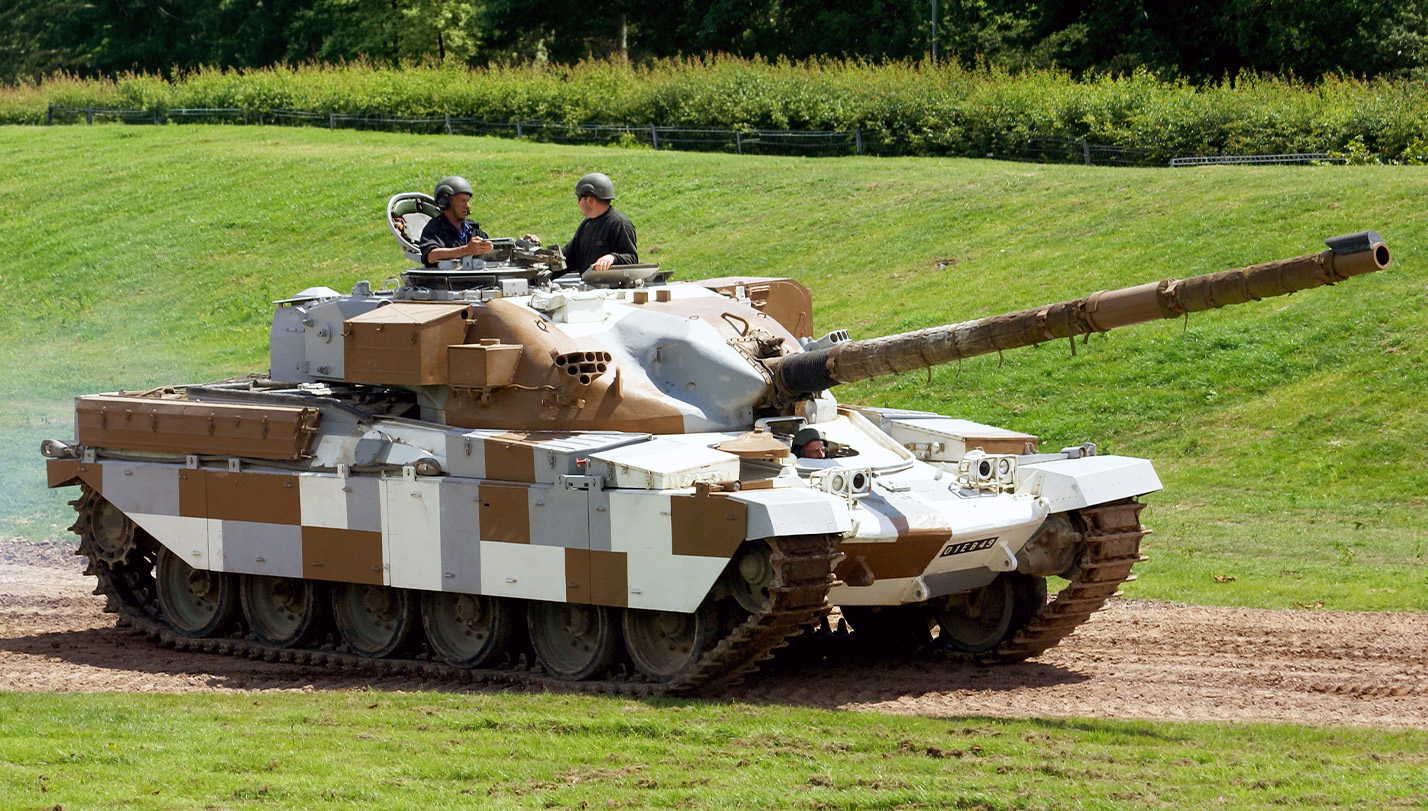
The Tank Museum’s Chieftain Mark 2
This tank was received from MEXE Hurn where it was apparently used for gunnery experiments with various extemporised brackets attached to the turret. It was then carrying the number 06SP50. It was subsequently restored by the Friends and restored to its original number 01EB49. Previously, this tank was referred to as a Mark 5/6 but it has not received all the qualifying upgrades. This Chieftain has the Y programme upgrades which consist mainly of modifications to the automotive system. It has also received 11.1 of the Fire control retrofit programme and the mountings for the MRS can be seen on the turret. It could well be the only genuine example of a Mark 2 Chieftain to survive.
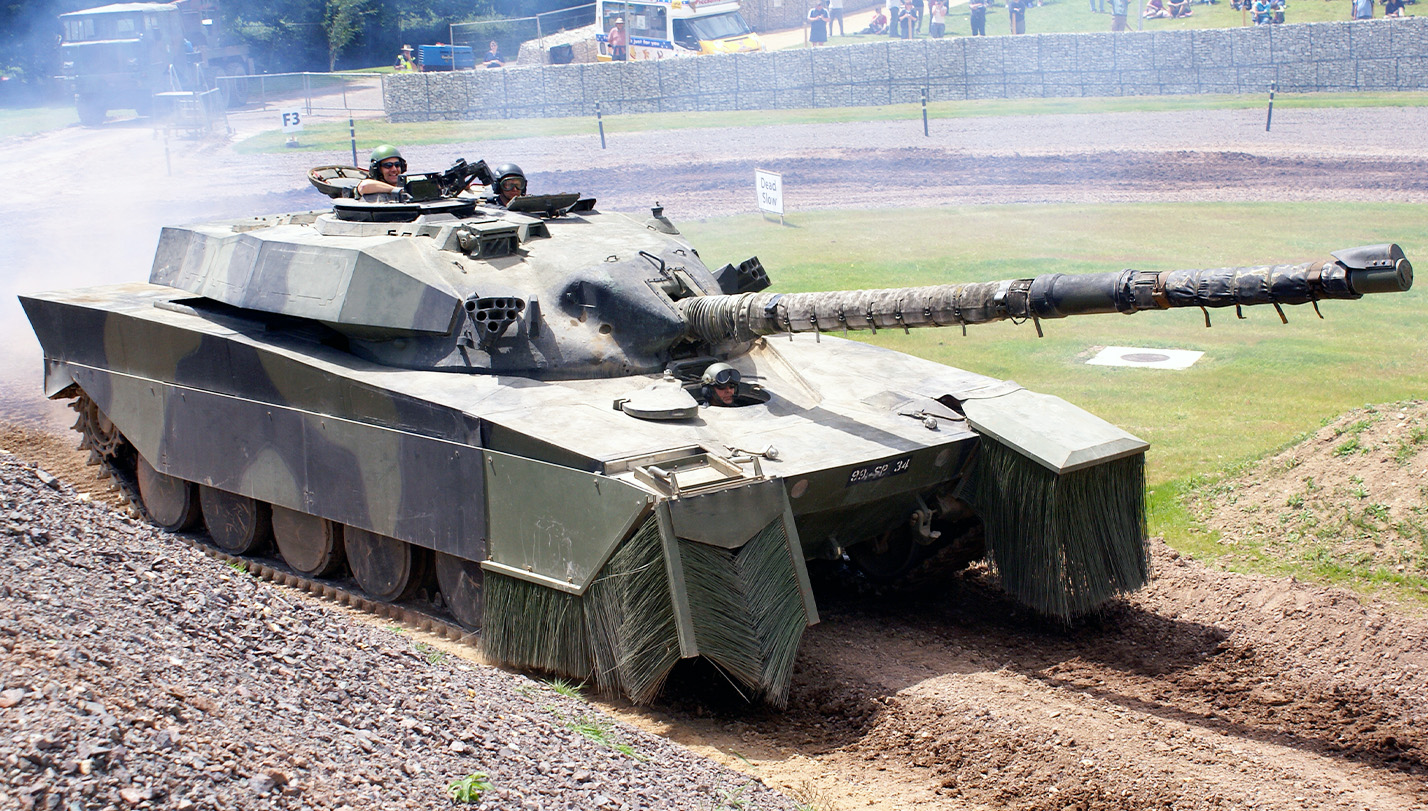
The Tank Museum’s Chieftain Crazy Horse
The concept of the Crazy Horse project came about in 1987 to meet a requirement for a mobile and manoeuvrable hard target for guided missile operators. This tank, 00EB33, was a Chieftain originally in service with the RAC Training Regiment at Catterick that was converted into a radio controlled target tank.
The Chieftain was stripped of its gun, radio, Nuclear Biological Chemical equipment and ammunition stowage. It was then refitted with a remote controlled hydraulic system and a colour camera that fed back real time information to the pilot who controlled the tank from a converted Stormer APC.
Trials at Shoeburyness revealed that the tank could be controlled at a range of up to 6 km, the remote driver using a link to the tank’s camera equipment.
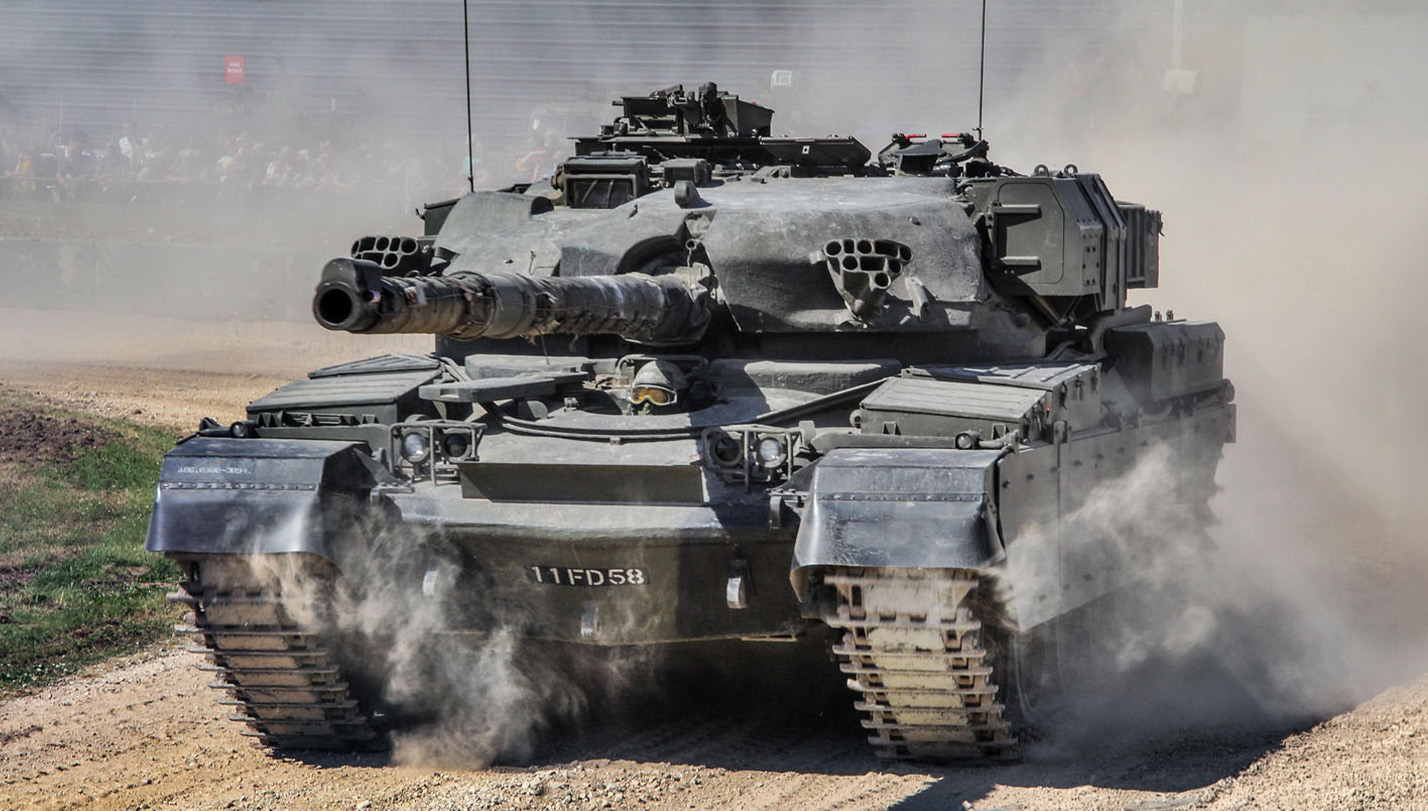
The Tank Museum’s Chieftain Mk 11.
This particular vehicle (11 FD 58) was built as a Mark 5 at the Royal Ordnance Factory in Leeds in 1972. It has been upgraded several times over its life and is now a Mark 11. The most obvious feature o fthis model are the add-on Stillbrew armour on the front of the turret and next to the driver’s hatch, and the Thermal Observation Gunnery Sight. This replaced the older and larger Infra-Red searchlight on the left of the turret.
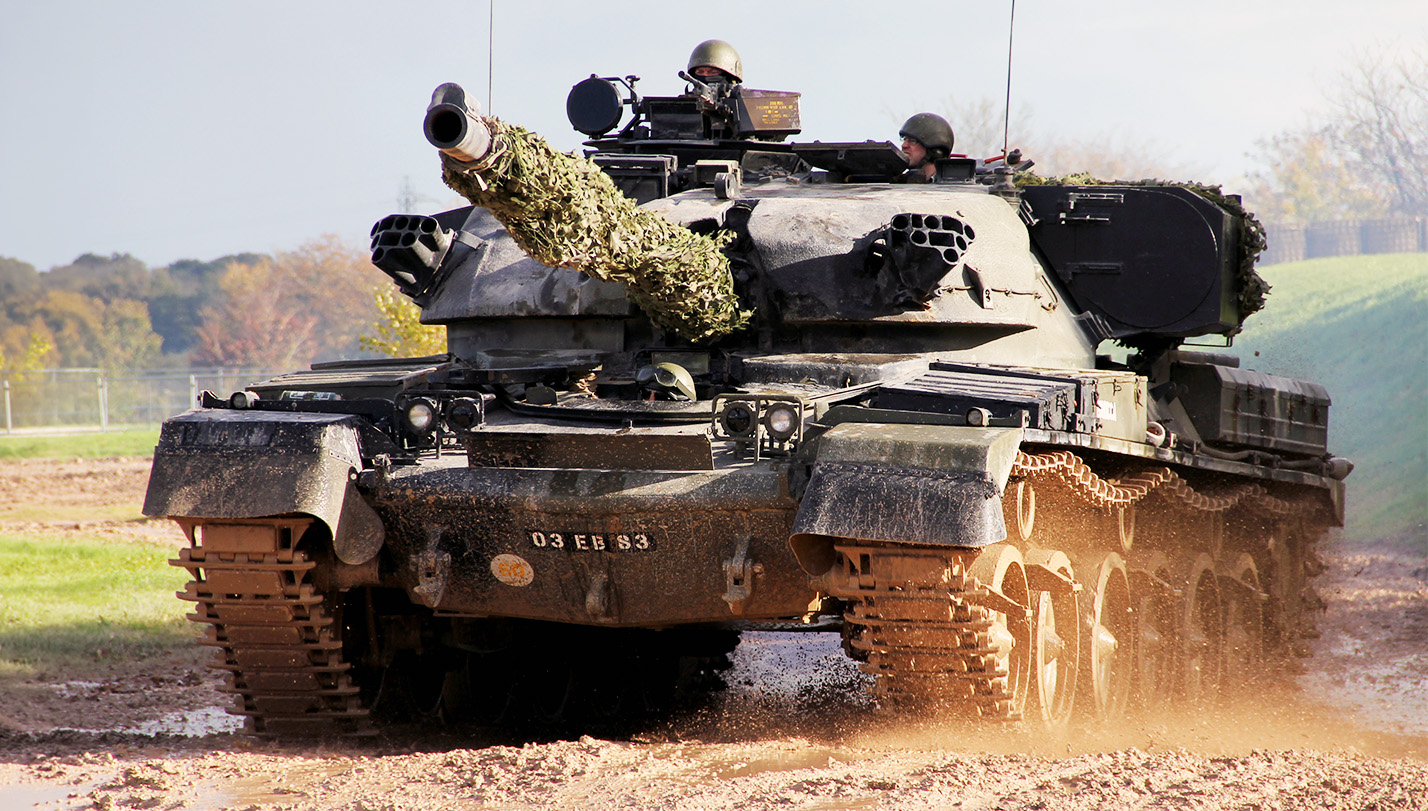
The Tank Museum’s Chieftain Mk 10.
The Mark 10 represents the Chieftain in one of its most updated forms – with upgraded NBC filtration equipment on the back of the turret, and the more obvious large chunk of Stillbrew armour on the front of the turret and around the driver’s position.
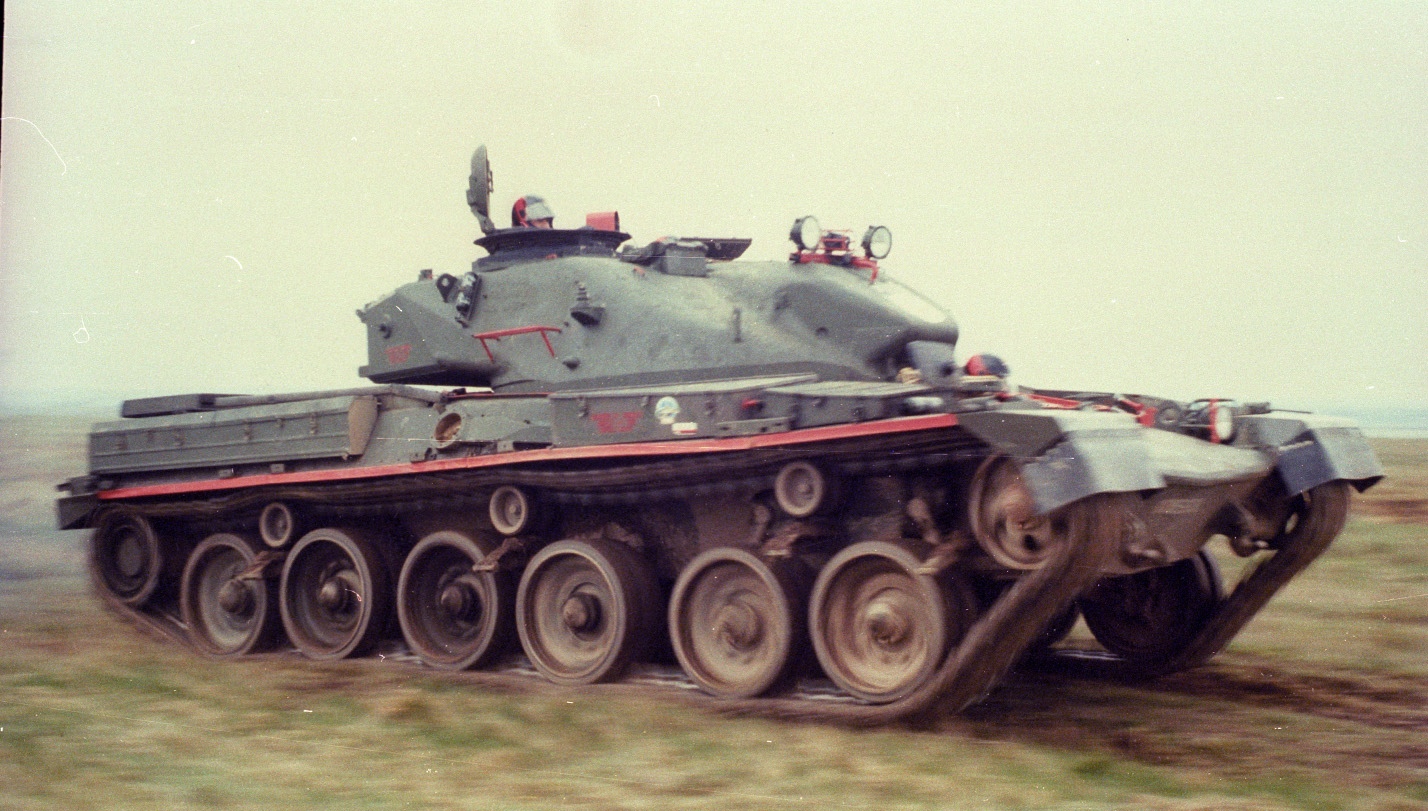
Chieftain 900
Chieftain 900 was a Royal Ordnance Factory private initiative, and was based on the latest production Chieftain hull, the Chieftain Mark 5/3(P). It was manufactured in the mid – to late 1970s.
It was to be fitted with Chobham armour, a more powerful 900hp engine, improved suspension, and a range of options for fire control systems & sights. Two vehicles were converted and automotive trials conducted. They were exhibited at the British Army Equipment Exhibition in 1982, but there were no orders and the project was abandoned by 1986.