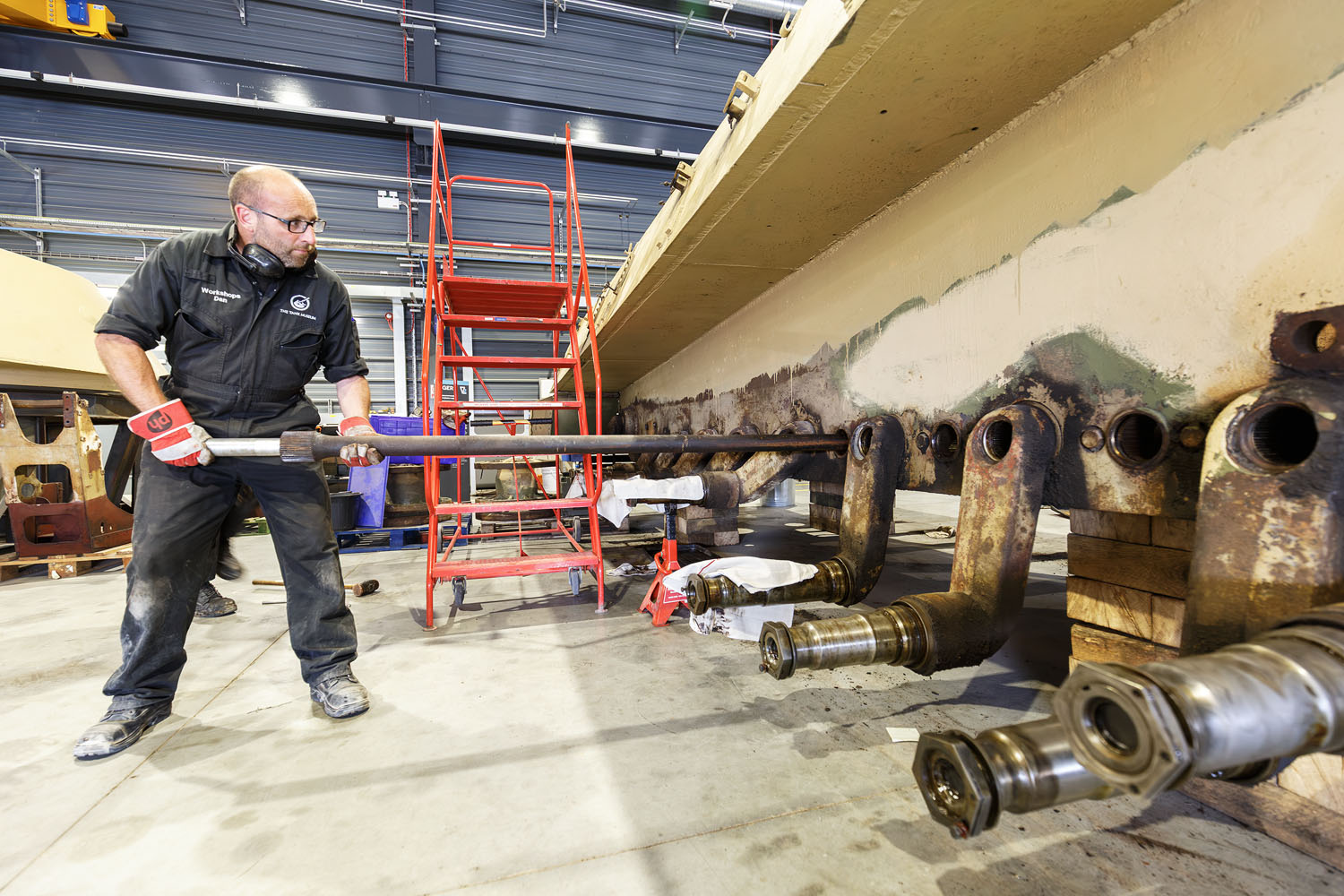
Restoration work on King Tiger V2 (KTV2) has reached another significant milestone, with the successful removal of all 36 roadwheels and the vehicle’s torsion bar suspension now being dismantled for inspection.
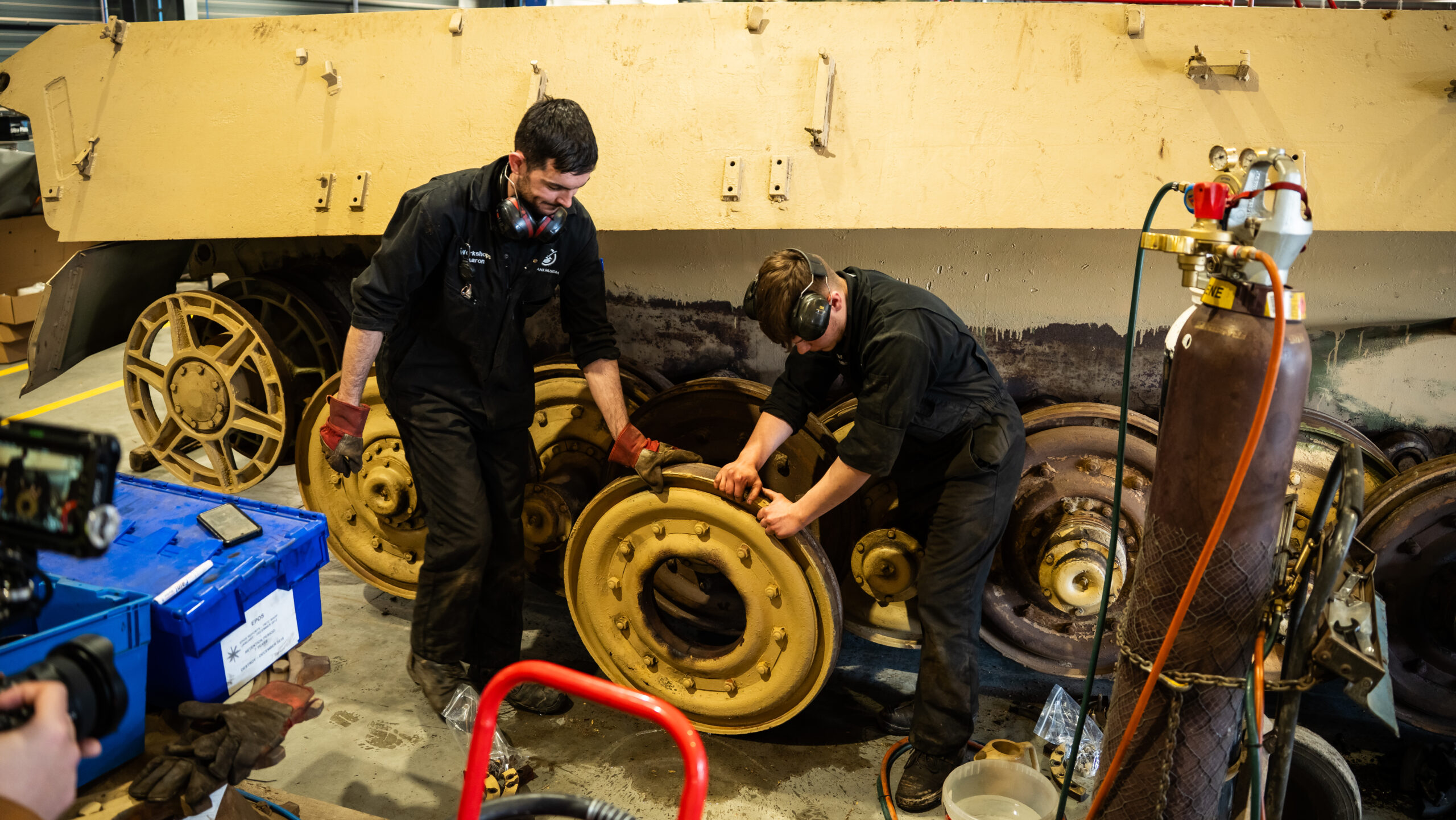
Taking off 36 roadwheels was a complex undertaking for our team. Unlike conventional wheels, each road wheel has two blocks pinching it in place, stopping the wheel from falling off.
So, we got our heads together and devised the best plan to remove the roadwheels: using thermodynamics. Thankfully, this worked well and there were only a few stubborn wheels, which took a bit more persuasion.
Once the wheels and idlers were finally removed, they were labelled and are now stored awaiting further work.
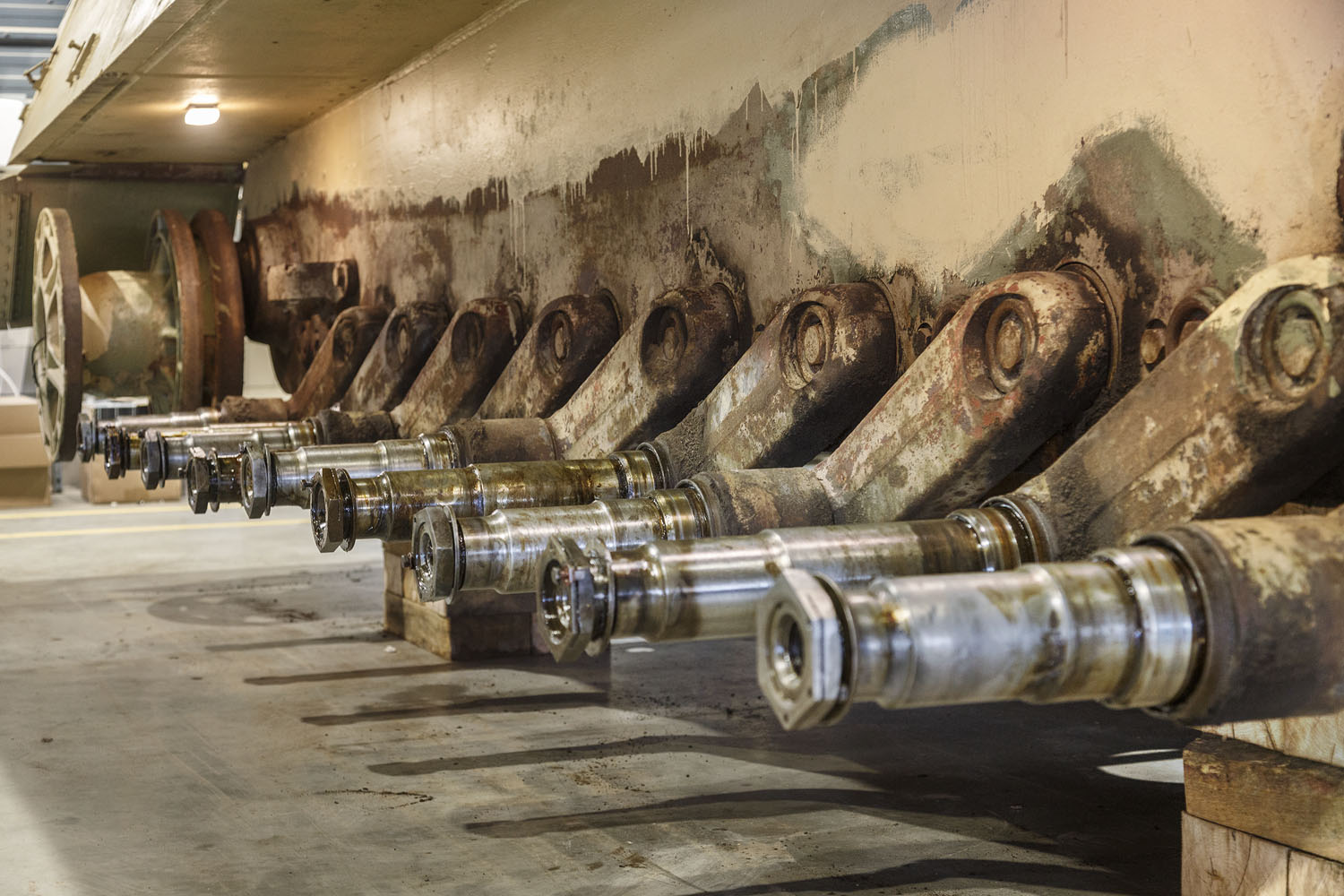
Unlike a spring suspension fitted on modern-day cars, King Tiger is fitted with a torsion bar suspension. With this suspension type, the wheel is mounted to a wheel hub, which connects to the axle arm.
The axle arm is then attached to the torsion bar. The bars pass through the hull but, crucially, are not connected to a wheel on the opposite side.
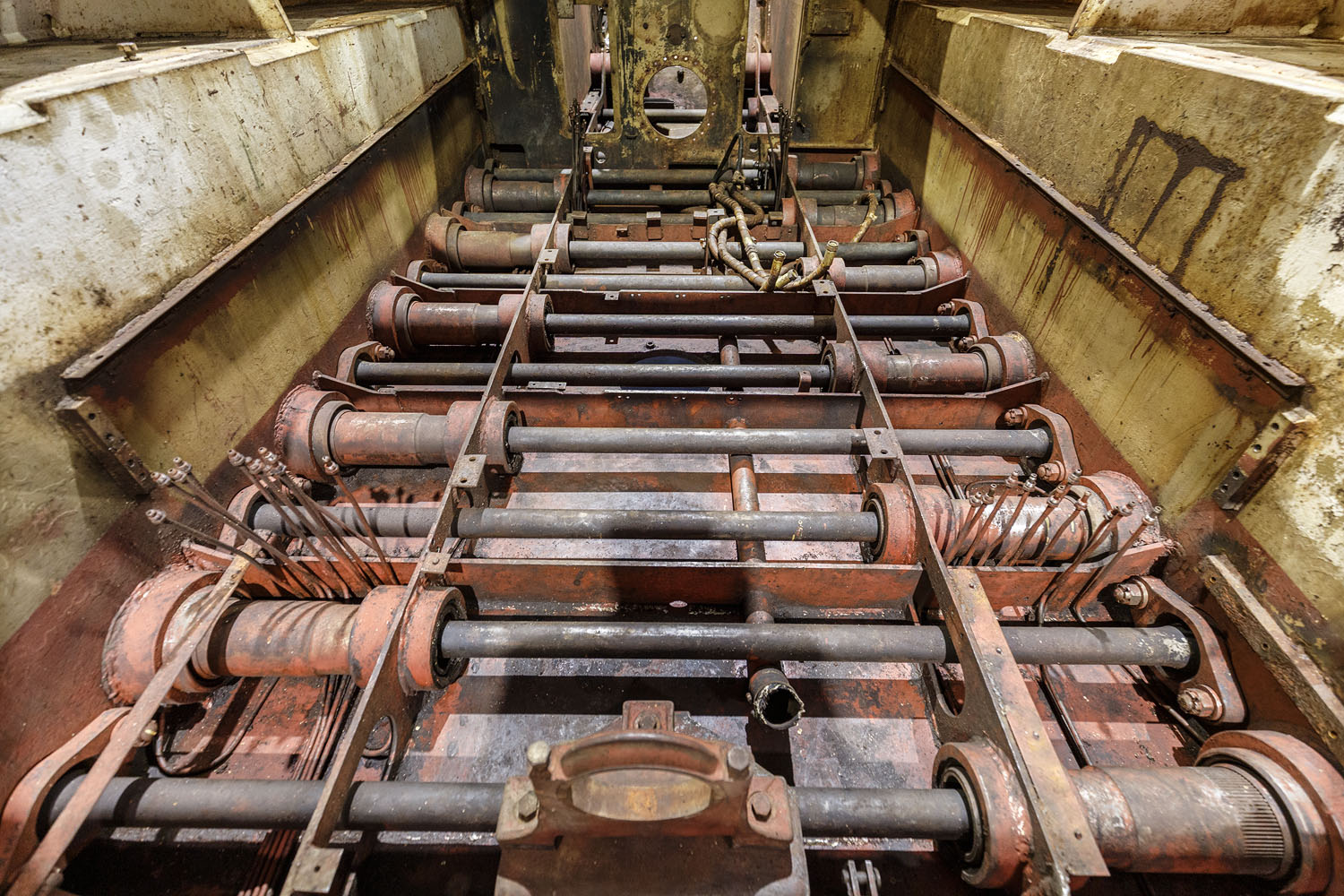
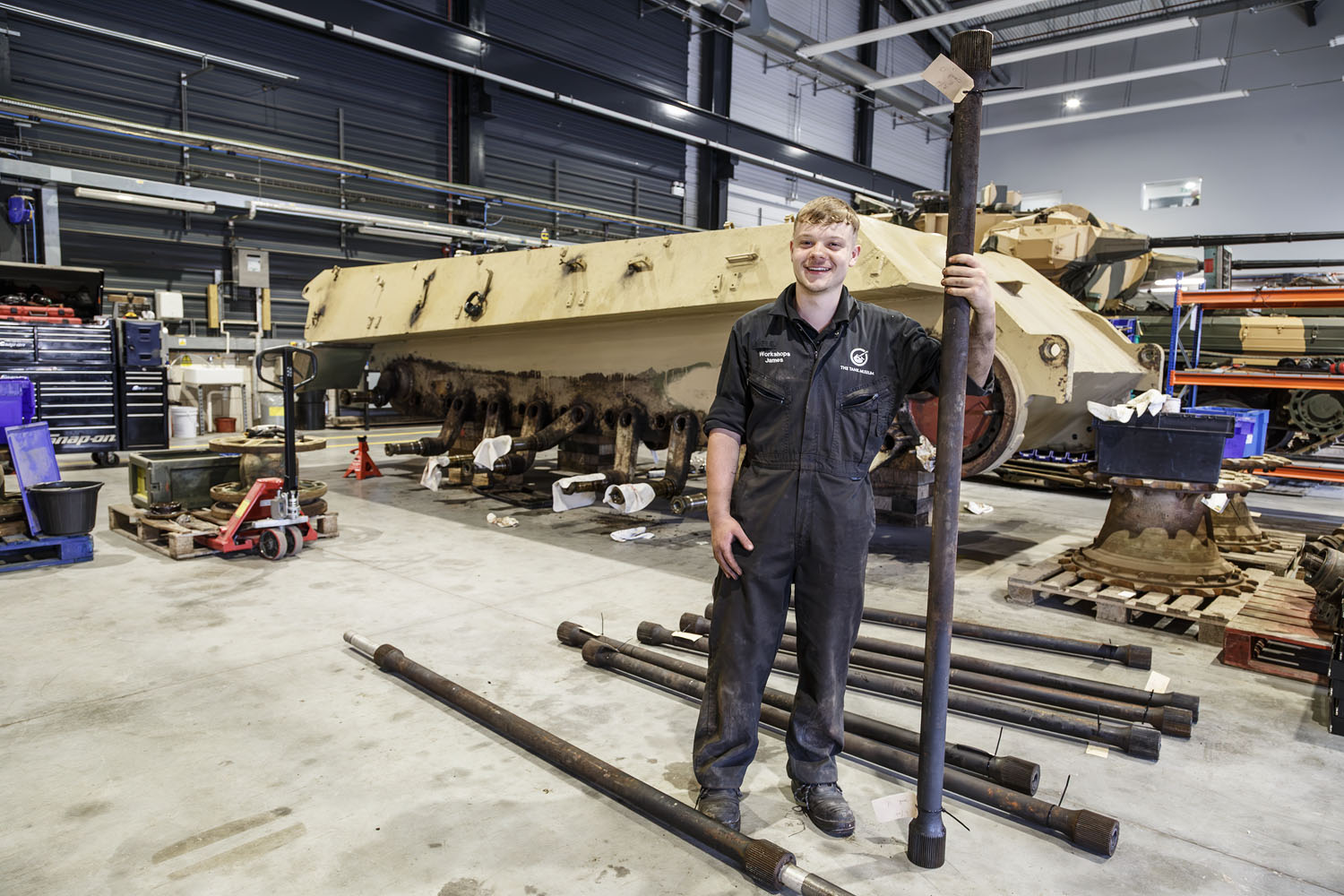
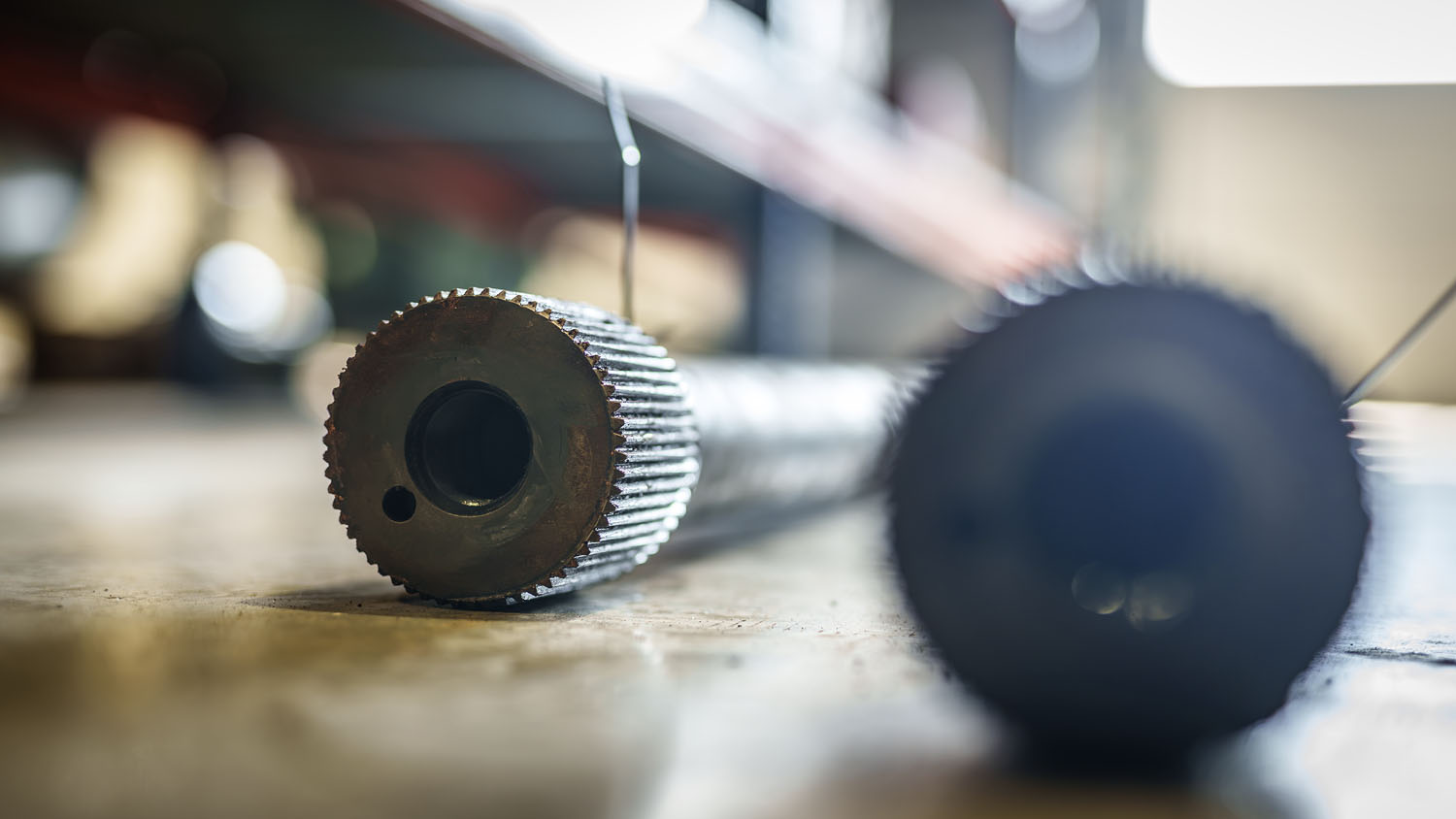
Each end of the suspension bars has 58 splines around the circumference. These splines prevent the bars rotating in the suspension arms. As the vehicle crosses the rough terrain, this causes the torsion bar to twist.
The bars need to be properly removed and inspected, given that we plan to run KTV2 once it has been restored.
Due to the age of KTV2 and the nature of the restoration, we’ve had to be extremely cautious throughout the project. However, in this instance, we’re having to treat the torsion bars very delicately, being careful not to damage any of the suspension.
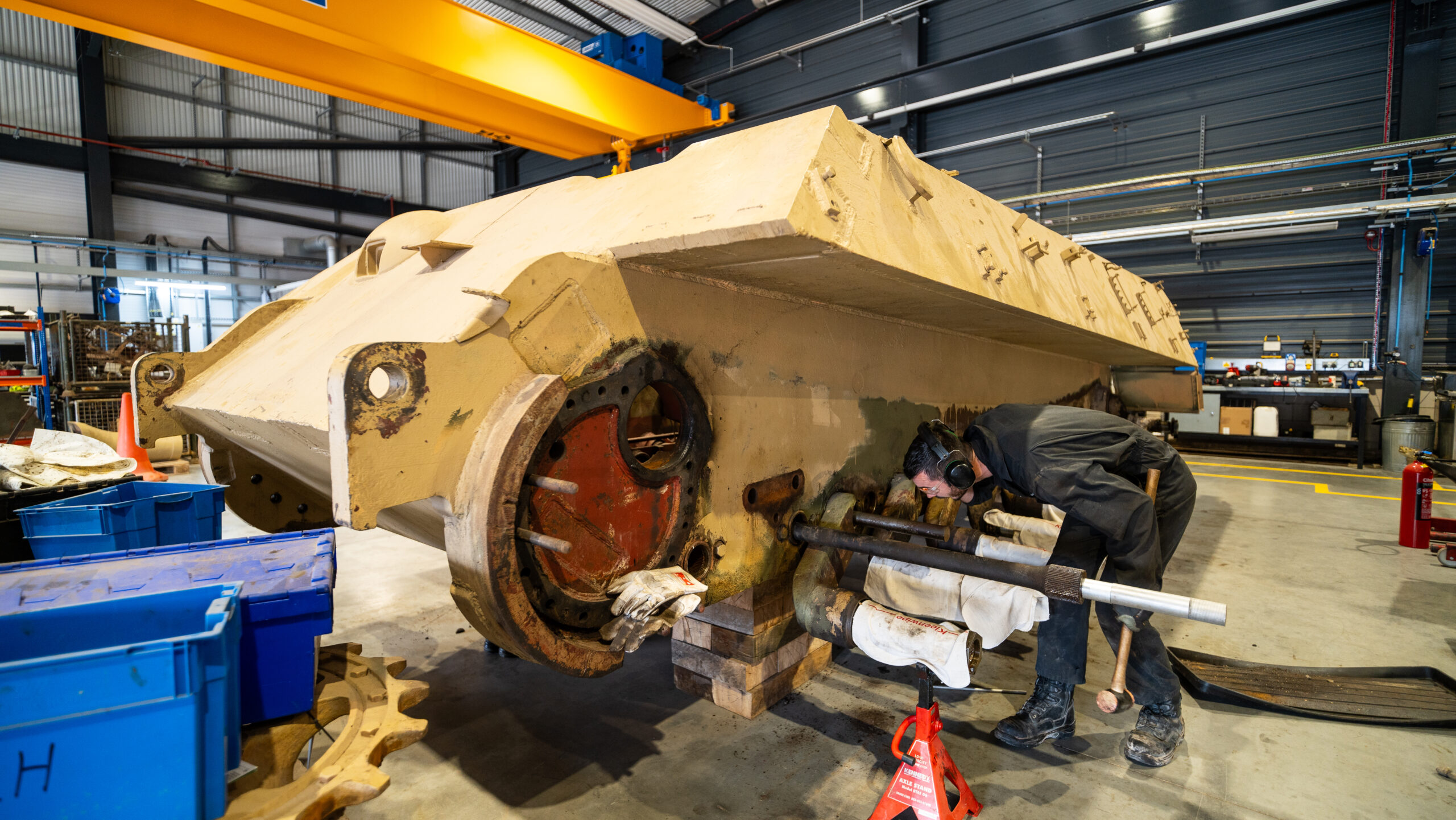
Initially, we thought we were going to need pullers to remove the torsion bars. However, due to KTV2 not seeing combat and being stored quite well, we were able to get the torsion bars out by making a specialist tool instead.
Our homemade tool allowed us to attach it to the bars and have something to hold onto when removing the torsion bars. Attaching a second tool, made from steel to the other end allowed us to hit it with a hammer, loosening the bars and carefully removing each one.
As we approached removing the bars near the fuel tanks, we noticed some were obstructed by the fuel lines. We couldn’t help but think how difficult it would’ve been in the field, given certain torsion bars were inaccessible with the fuel lines, fuel tanks, and turret basket.
Because there is no master spline to dictate a fixed installation position, each torsion bar can be refitted in multiple orientations. To combat this, we have documented the position of the suspension arms before removing any torsion bars.
We also took several measurements: the drop from the armour to the arm, the angle of the suspension arm itself, and the angle of the hull. Our measurements showed that the distance between the armour and suspension arm varied slightly because of the hull’s sloped armour. However, the suspension arms themselves were positioned very consistently, varying by no more than 15mm.
With the torsion bars and suspension arms removed, areas of KTV2’s original paint have now been uncovered for the first time. This discovery opens up an exciting new phase of the restoration and investigation process.