For over five years, through the dark days of defeat in 1940, the horrors of the Blitz, people had endured the privations of the blackout and rationing and said goodbye to relatives in uniform, not knowing if they would meet again.
With the United States entry into the War following the Japanese attack on Pearl Harbor in December 1941, southern England, particularly, had become a vast base for US, British, and Commonwealth troops waiting for D-Day.
The biggest amphibious operation ever had been undertaken, and the enemy had been driven back while Soviet forces advanced from the east.
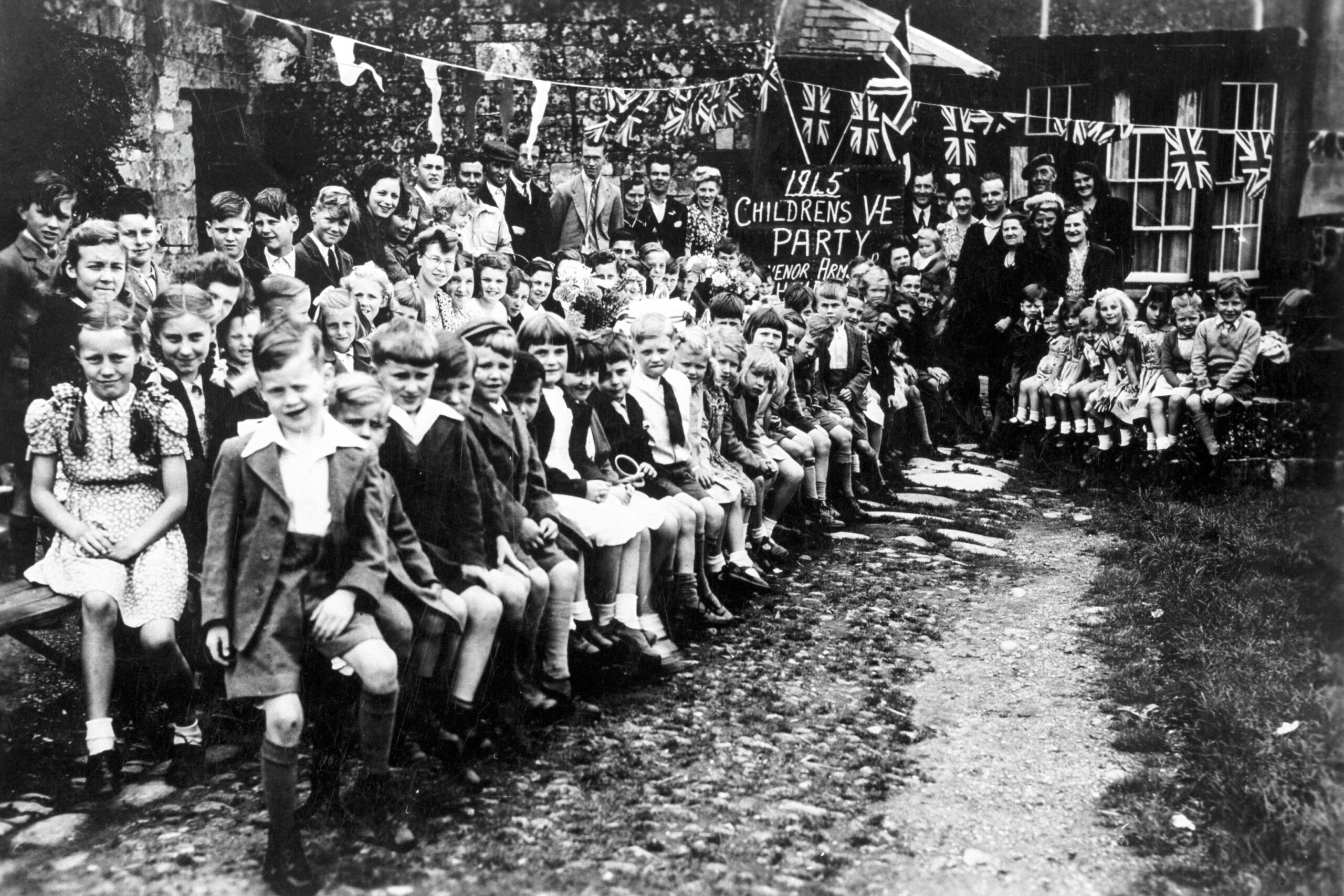
Now the conflict in Europe was finished – it was time to party!
The War itself was not yet over though. Japan would not be defeated until the bombing of Hiroshima and Nagasaki on 6 August and 9 August , and until then, the bitter fighting in Burma and the Pacific would continue.
Much of Europe lay in ruins. The initial surrender of German troops in north-west Europe had occurred four days earlier on Luneberg Heath, followed by the ratification of the final surrender in Berlin.
The British and Canadian 21st Army Group occupied most of northern Germany, with the US 12th Army Group in the centre and the US 6th Army Group in southern Germany and Austria. Eastern Germany, including Berlin, lay under the control of the Soviet Red Army.
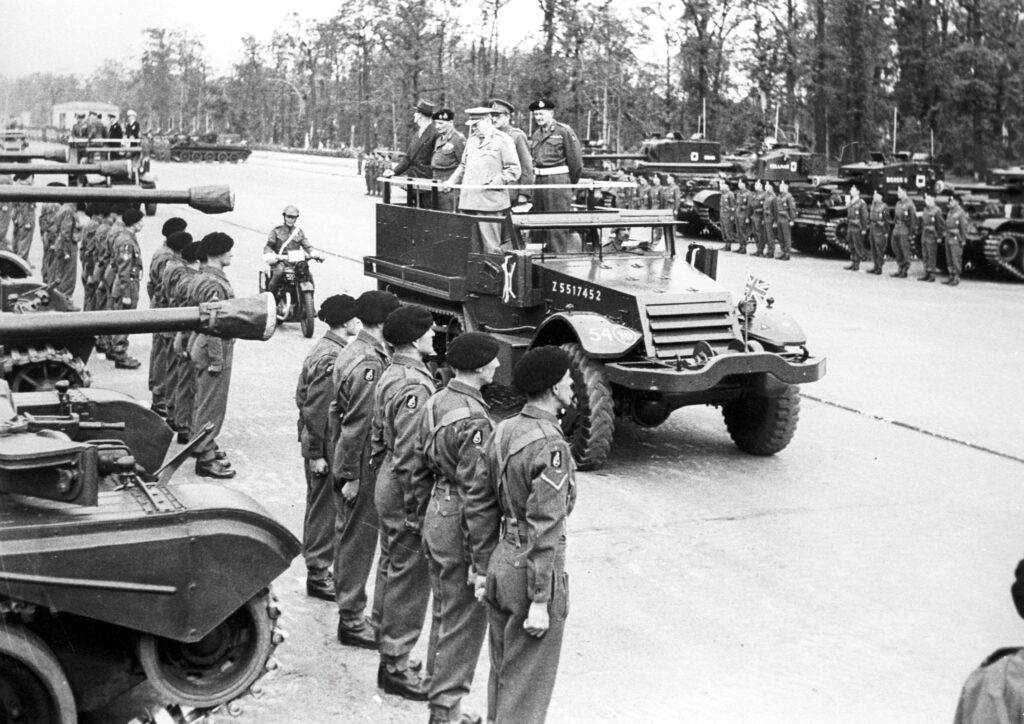
Germany would be partitioned according to a prearranged plan with each of the Allied nations controlling a zone, but the immediate need was to put in place an administration to get the country running and to control the great mass of displaced persons and Prisoners of War.
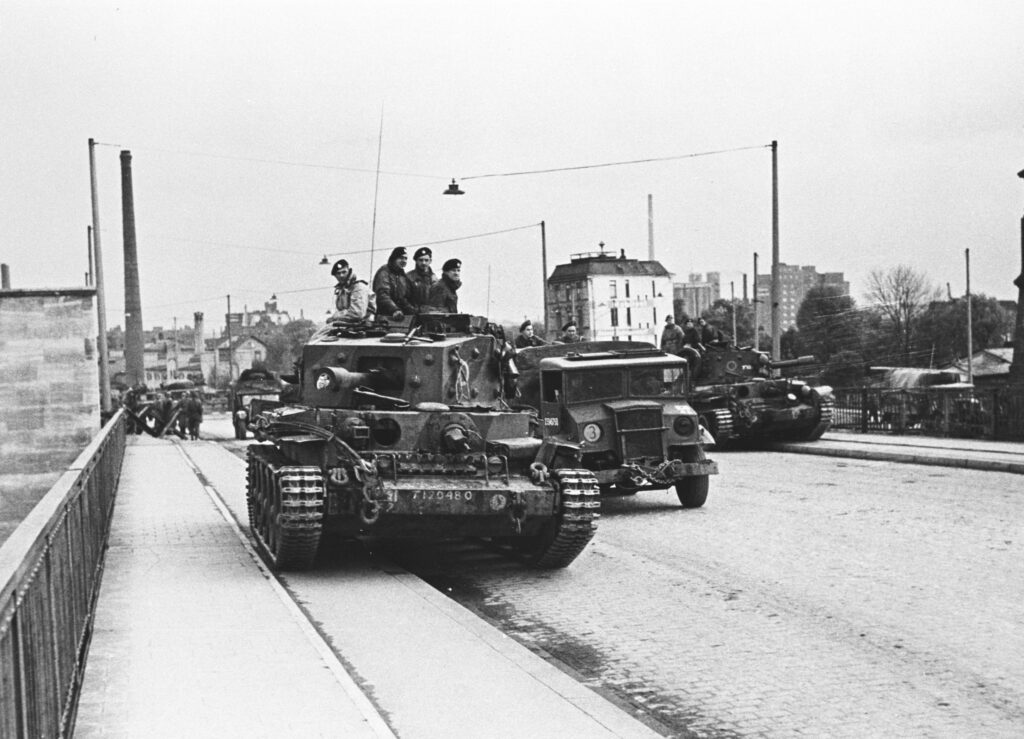
German forces – Army, SS, Luftwaffe, and Kriegsmarine – would need to be disarmed, including ships at sea, particularly U-Boats, that would need to be escorted to port.
Until German ports such as Hamburg could be cleared, supplies would still need to be transported through France and the Low Countries, more work for the huge number of US “Deuce and a Half” trucks of the Red Ball Express.
Providing food and medical supplies for the civilian population would continue to be a massive undertaking, particularly for the inhabitants of the Netherlands who had endured the “Hunger Winter” of 1944-45. In Germany and the east, the full horror of Nazi crimes – slave labour and the concentration camps – was being revealed and the perpetrators brought to book. The Nuremberg trials
As Europe gradually recovered in the years after the War, Germany would, of course, remain partitioned with the formalisation of the Inner German Border between East and West Germany and the division of Berlin into for Sectors, accessible from the west via a rail and road corridor.
Only with the fall of the Soviet Union in 1991 would German reunification take place.
For now, though, towns and cities resounded to the sounds of revelry, delight, and sheer relief that the first major phase at least of a uniquely dreadful conflict was over.