On the eve of the German invasion in May 1940, the French Army possessed some 3-3,500 tanks, of which perhaps 2,300 were modern. These were the equals or, in many cases, better than, the German armour opposing them.
In spite of this, France fell in a little over six weeks. In this piece we need to examine the principal designs and what made them ineffective against the oncoming Panzer Divisions.
The Tanks
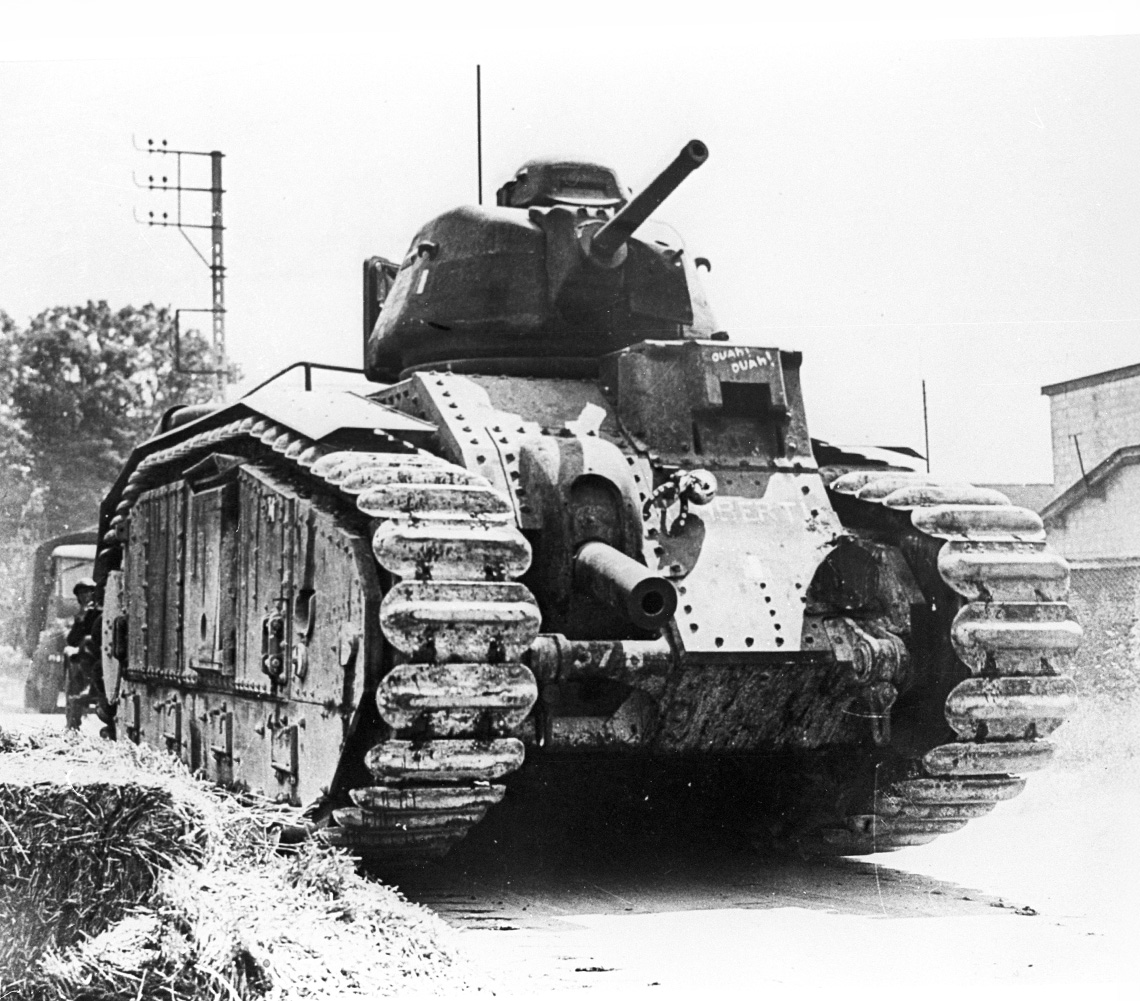
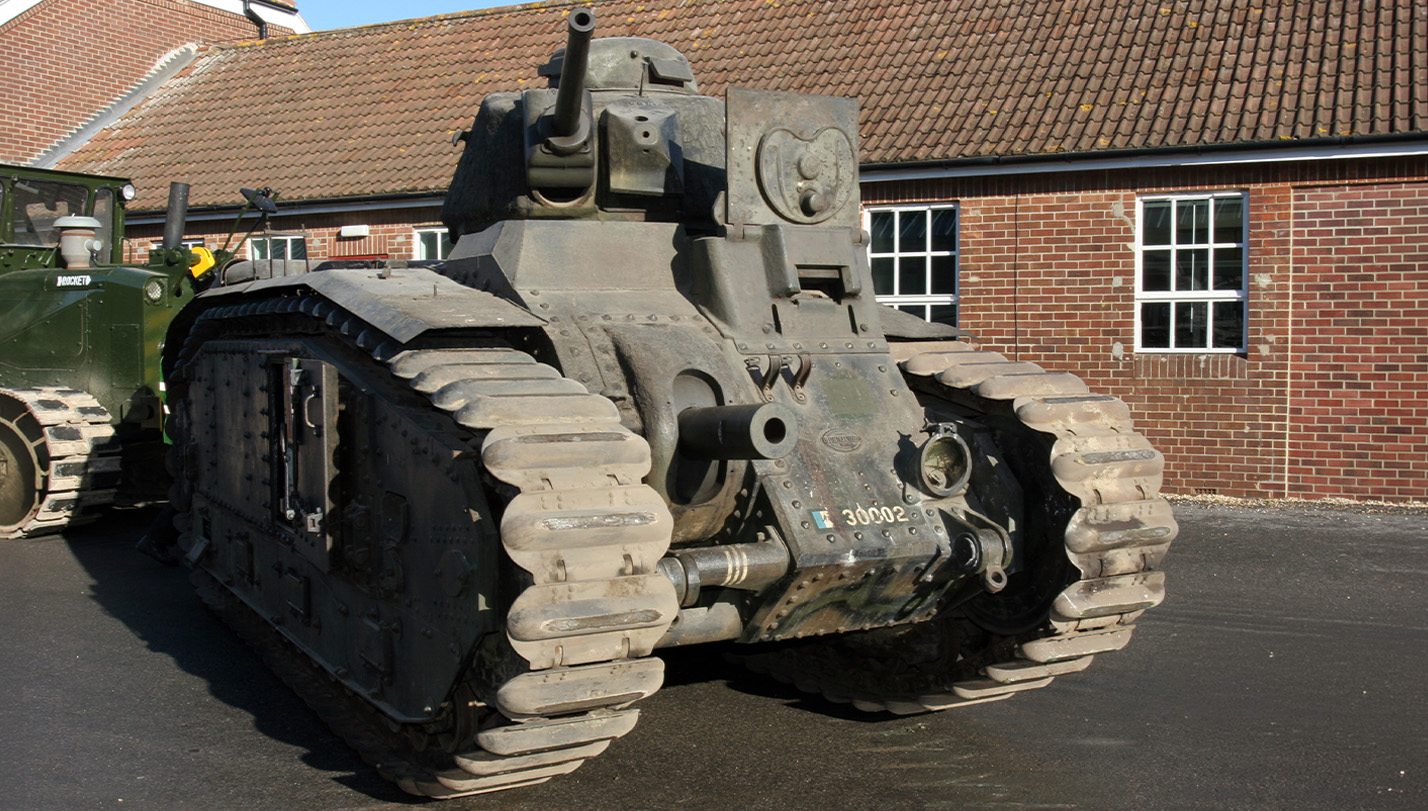
Char B1 bis.
A heavily armoured breakthrough tank of 32 tonnes with armour of up to 60mm, the Char B1 bis were nicknamed Kolossen by the German tank crews who encountered them.
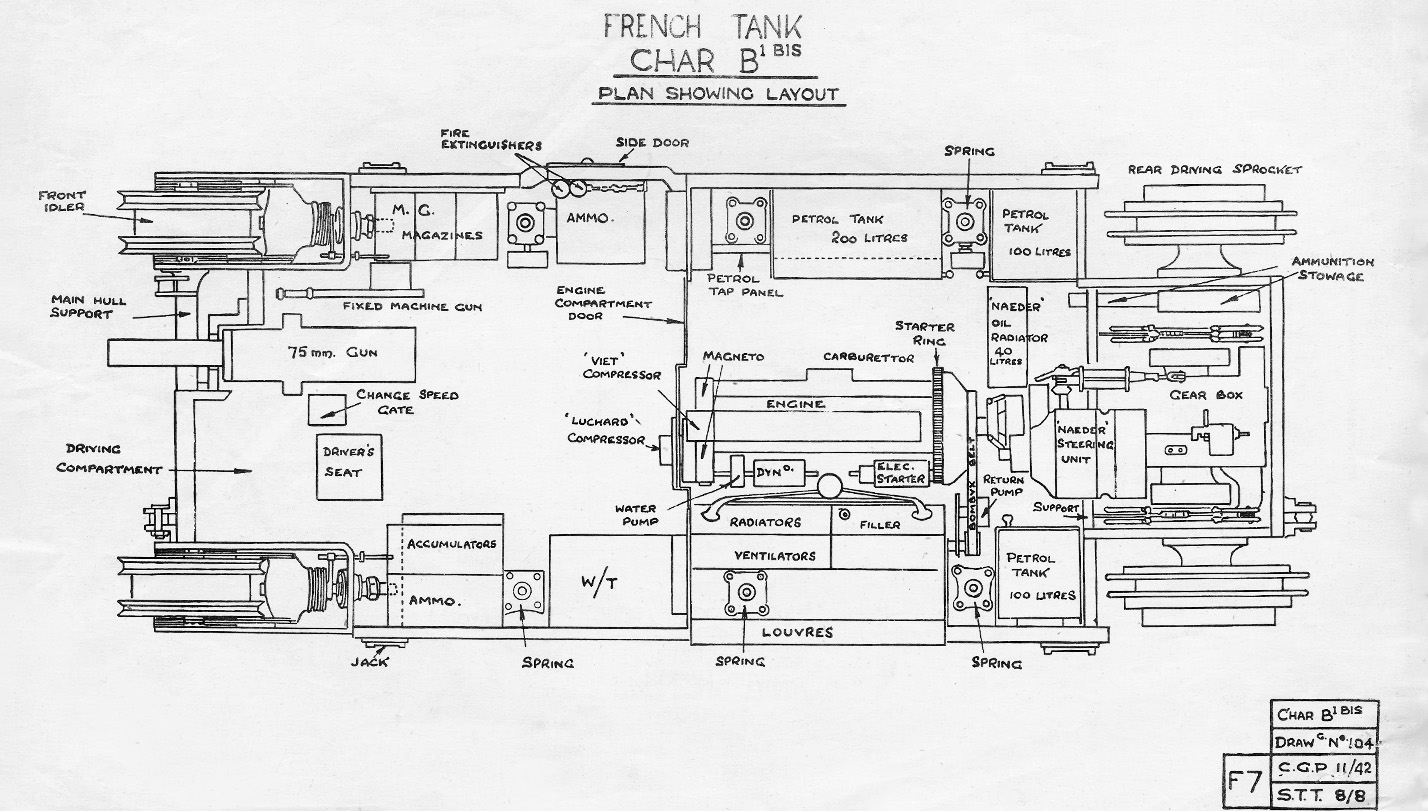
It mounted a short barrelled 75mm gun in the hull with a secondary 47mm gun in a one-man turret. Asymmetrical in layout, the engine was positioned on the left of the tank towards the rear, counterbalanced by the weight of the 75mm gun sitting front right.
Intended as a “bunker buster”, the 75mm gun was aimed and fired by the driver by turning the whole vehicle, this being made easier by Naeder transmission which permitted very fine incremental turns.
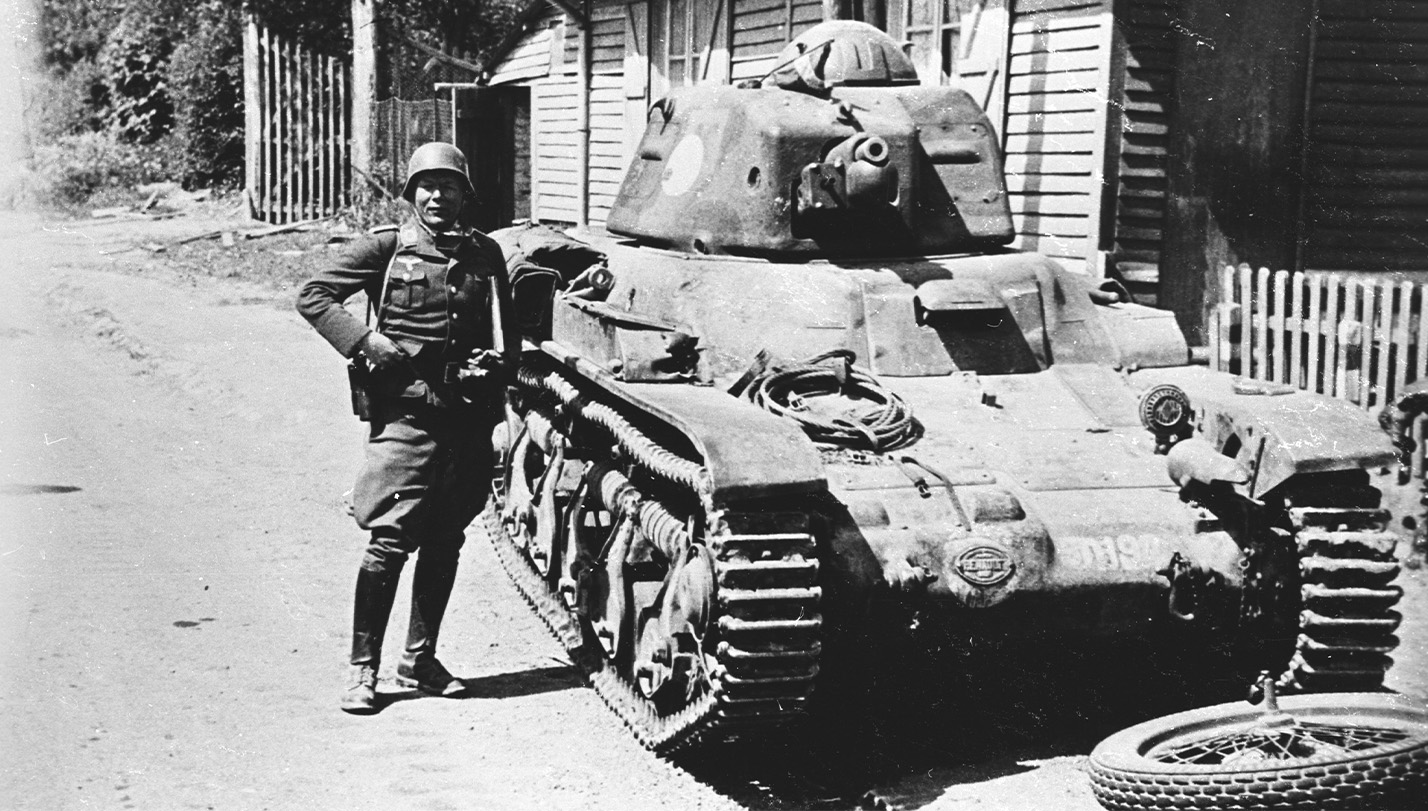
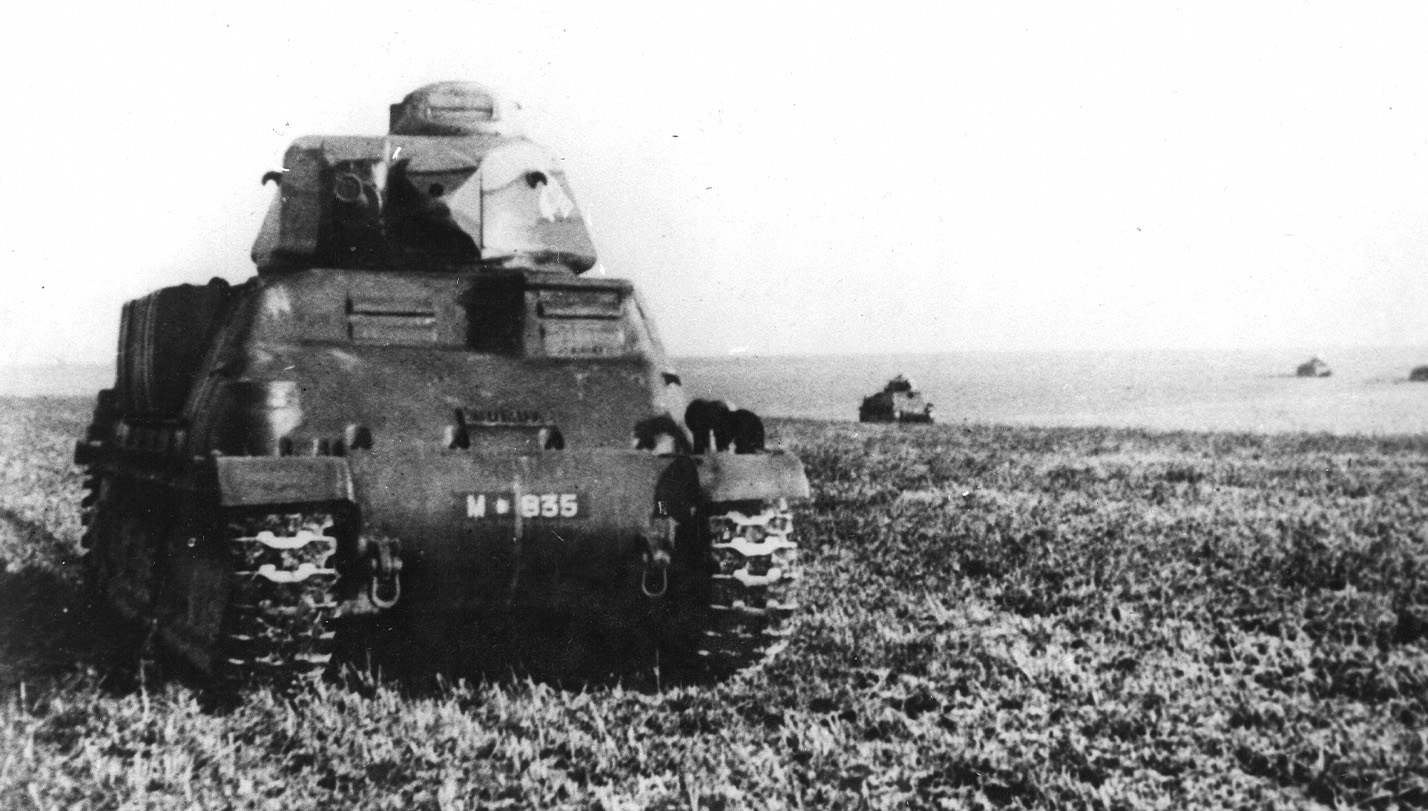
Renault R35 and Hotchkiss H35/H39.
Both the Renault and Hotchkiss designs were built to a 1933 specification for a char lẻger, a light tank to replace the WW I era Renault FT-17.
The R35 weighed 10 tonnes, had a crew of two and mounted a 37mm SA 18 or SA 38 gun with a coaxial 7.5mm M1931 MG. Hull armour was 40mm and the Renault 82hp petrol engine gave a top speed of 20km/h with a range of 140km.
Hotchkiss produced a prototype char lẻger design in early 1935, by which time the R35 had already been ordered in quantity but the cavalry were looking for a small but well armoured char de cavalerie to accompany the S35 in the newly formed light mechanised divisions.
The H35 was similar in terms of armament and armour protection, with a 75hp Hotchkiss engine giving a 28km/h top speed with a range of 129km. An upgrade, the H39, equipped with the Hotchkiss 120hp engine gave a top speed of 36km/h though range was cut to 90km.
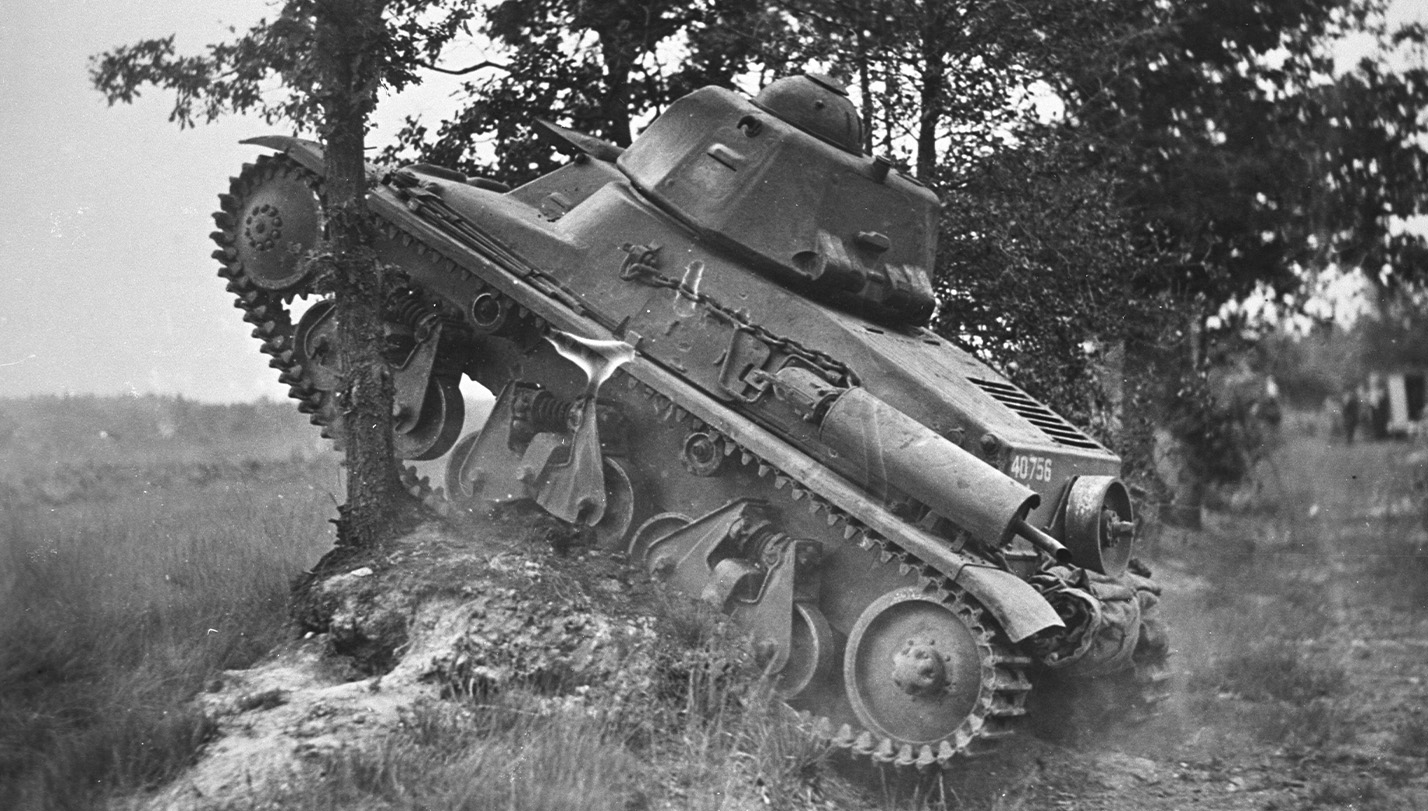
Both Renault and Hotchkiss vehicles relied on cast armour sections bolted to a substructure with the one man cast APX turret.
Somua S35.
Arguably the best medium tank of the early war period, the S35 was the first tank of completely cast construction. Weighing 20 tonnes with hull armour of 40mm, the S35 mounted the 47mm SA 35 gun which, with a muzzle velocity of 670m/sec, was the equal of any other tank gun of the period. The Somua V-8 190hp engine gave a top speed of 40km/h with a range of 257km.
The Formations.
Over half of the frontline French armour was tied to supporting infantry formations, the bataillions organiques of around 45 R35 and H35s each attached to the various armies for infantry support and thus deprived of freedom of manoeuvre.
Modernisation was however belatedly occurring with the formation of Divisions Lẻgẻres Mechaniques – DLMs – and Divisions Cuirassẻe de Rẻserve – DCr.
Each DLM – literally “light motorised division” – comprised two tank regiments, a total of around 190 Char Bs and S35s, with reconnaissance, mechanized infantry, artillery and engineer units. With the potential for fast aggressive movement and its own intrinsic support units, the DLM was probably the closest in concept to a German Panzer Division, although by May 1940 only four had been formed.
The DCr. – equipped with Char B 1 bis, Hotchkiss H39s and supporting motorised infantry, artillery and engineers – was designed for concentrated armoured assaults and counter attacks. Three DCr. had been formed by April 1940, with a fourth in the process of formation.
Although heading the right way, this was too little too late when faced with ten German Panzer Divisions.
Into Combat.
From the start, the Grand Quartier General, the French General Staff, were wrong footed by the advance of the German Army Group B into Belgium, drawing the bulk of French forces and the BEF north and allowing Army Group A to thrust through the Ardennes and across the Meuse.
Major problems quickly became apparent, principally the French failure to equip more than a small number of command tanks with voice radio. This meant that coordination within units and with other assets such as air and artillery quickly broke down.
In places, the superior quality of French armour did show through. At Hannut in Belgium, the S35s and H35s of 2e and 3e DLM inflicted severe losses on the Pz. I and IIs of 3 and 4 Panzer Divisions, and at Stonne, a single Char B1 bis accounted for twelve Pz. IIs and IIIs and two anti-tank guns despite being hit over a hundred times.
Conclusion.
Despite the quality of French tank design, an inability to recognise the true battlefield use of armour and the consequent failure to reorganise proved fatal. Add to this inadequate battlefield communications and all arms coordination, linked with major logistical failures, meant that France fell in a mere six weeks.
At a time when most, not least the German High Command, predicted a drawn-out campaign, possibly even a return to the trench warfare of WW1, this represented one of the most major upsets of any conflict ever fought.
Read more on the French tanks in our collection – Renault FT, Somua S35, Char B1 bis.