Welcome to the sixth instalment of our monthly blog, sharing untold stories and highlighting the interesting and unusual items from The Tank Museum’s Archive and Object Collection.
In this edition, we will be taking a look at the Fraser Flamethrower Collection – a large collection of reports, technical drawings, photographs and even a sectioned Churchill Crocodile flame projector.
Reginald Percy Fraser OBE was born in 1899, near Hailsham, Sussex. By 1921 he was Studying as a Tech Chemist Student and married in 1928, before moving to Kingston Upon Thames.
During the 1930’s Fraser was teaching at Imperial College London where he specialised in gases and propulsion, work he started on in the second half of the 1920’s. He recorded his experiments and results and stored them in green binders.
These experiments were carried out in tubes, with some being 40 centimetres in length while others were up to 5 metres. He recorded these experiments using his first major invention, the first camera capable of taking images of flame travelling at 21,000mph.
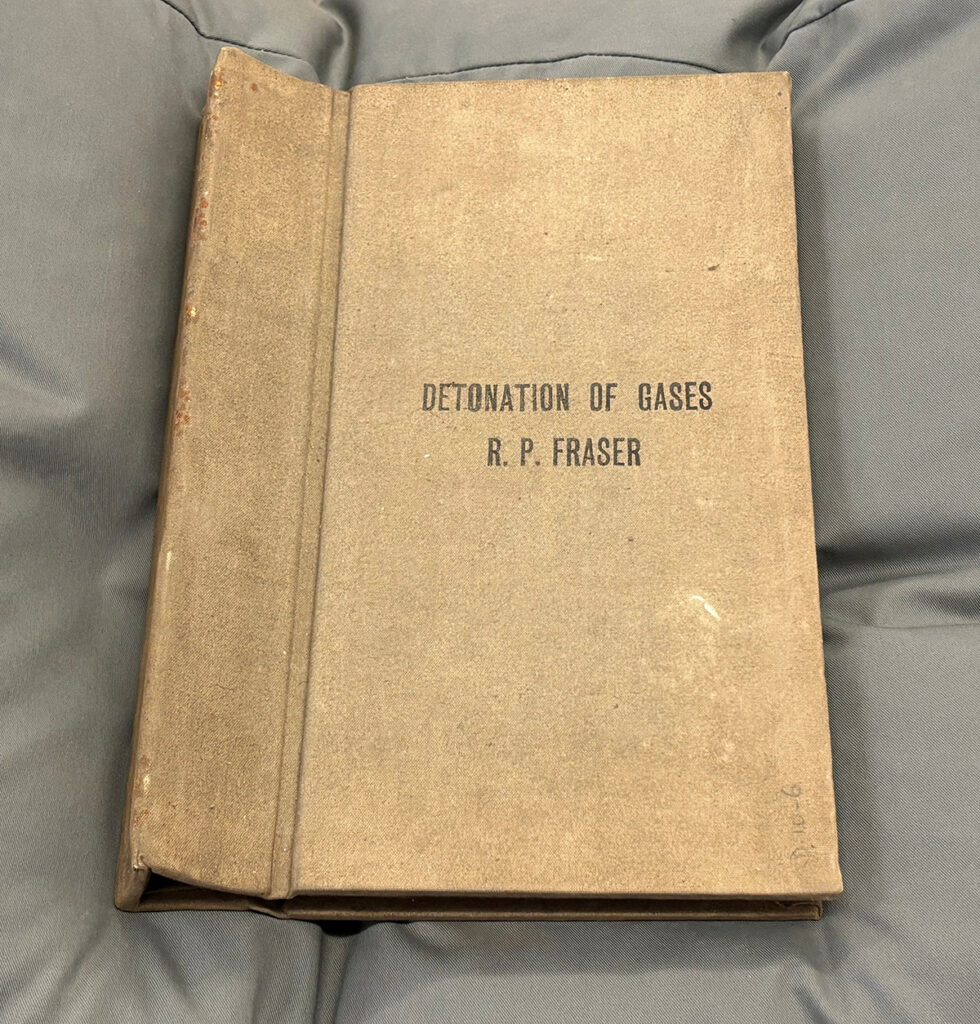
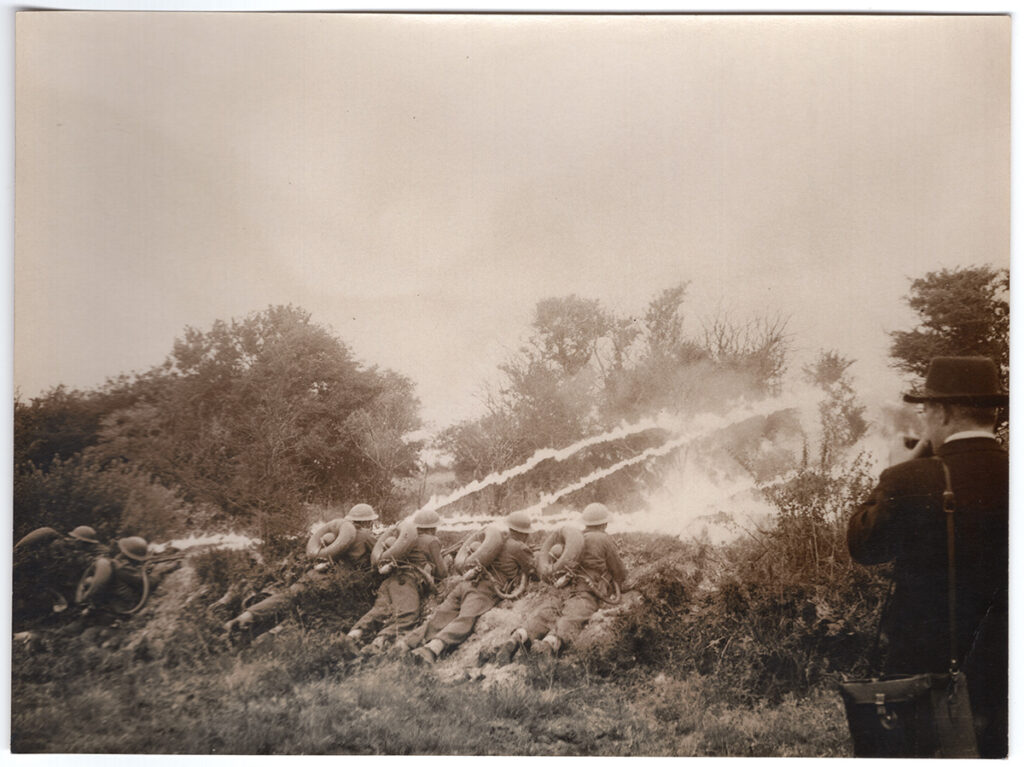
Shortly after the Dunkirk evacuation in 1940 and facing the threat of invasion, the Petroleum Warfare Department (PWD) was established by the government. Fraser, working with the PWD, used his experience with the detonation of gases to help develop flamethrowers and improve on the types seen during the First World War. The effective range was increased, a new type of fuel was developed, and many types of propellants were trialled. The flamethrowers were categorised as portable (handheld) and transportable (vehicle mounted)
Fraser developed an annular tank for storing the fuel and developed a flamethrower for infantry use called Flamethrower, Portable, No.1. This was used for training purposes as the improved Flamethrower, Portable, No.2 was developed shortly after. This received the nicknames Lifebuoy or Ack Pack. Another improvement over earlier flamethrowers was that the Lifebuoy only required one operator rather than two or three seen on older designs.
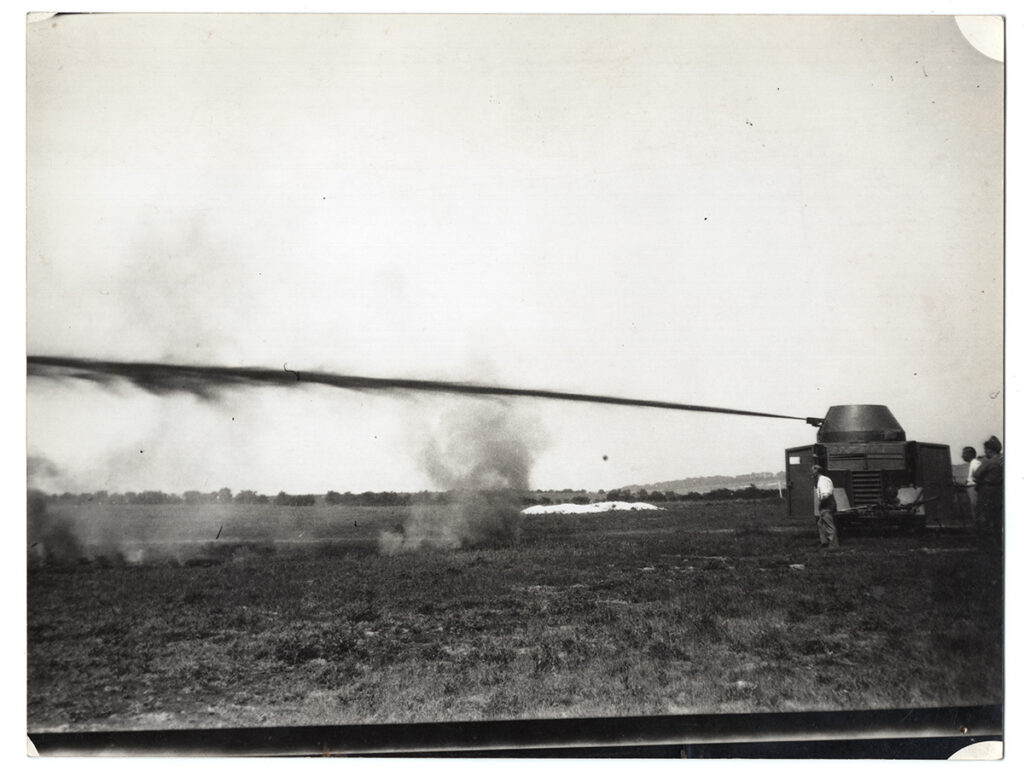
Fraser also developed a prototype transportable flamethrower based on a Commer lorry called the Commer Flamethrower. With this he was able to test new fuel types that projected a thickened fuel, partly contributing to the increased range.
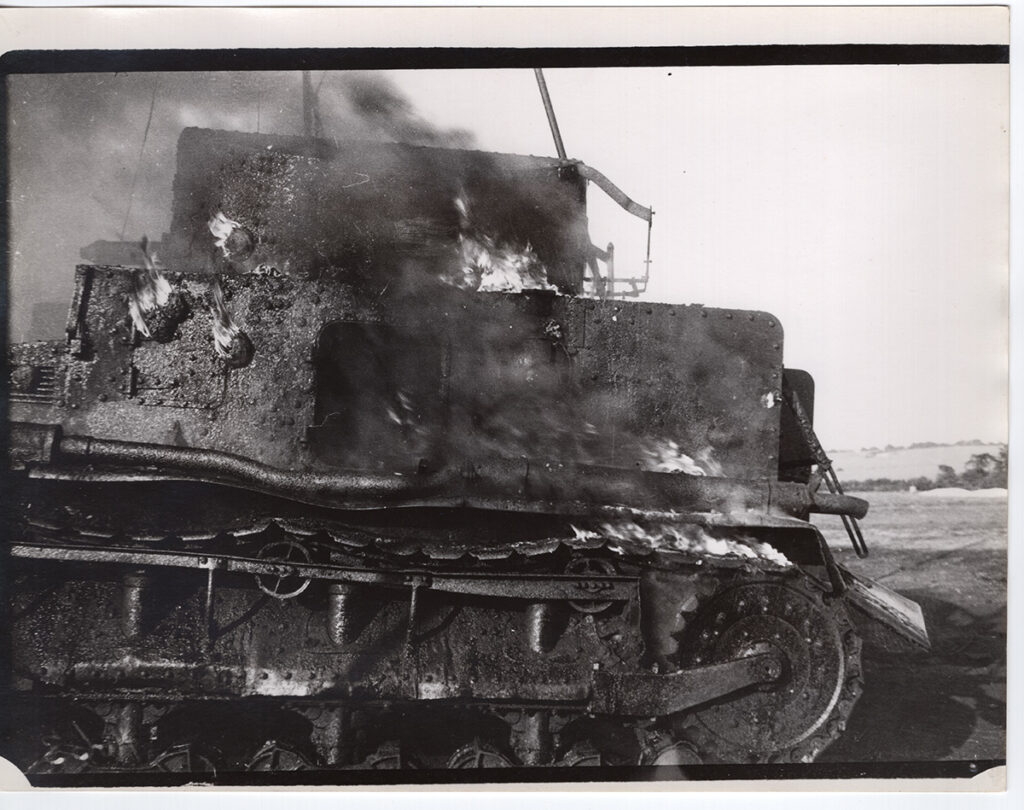
Fraser was also involved in the development of other flamethrowers such as the Sherman Adder, Ronson, Wasp, Cockatrice and Churchill Crocodile. An example of the latter can be seen in our Tank Story Hall exhibition.
I hope you enjoyed this month’s blog entry, we look forward to sharing the next one with you.