Often known as “The National Serviceman’s War” from the number of British National Service conscripts who served in it, the Korean War lasted three bloody years from June 1950 to July 1953.
This was the first of the Proxy Wars, with the North, the Democratic People’s Republic of Korea backed by Communist China and the Soviet Union versus the South, officially the Republic of Korea supported by a United Nations force led by the United States.
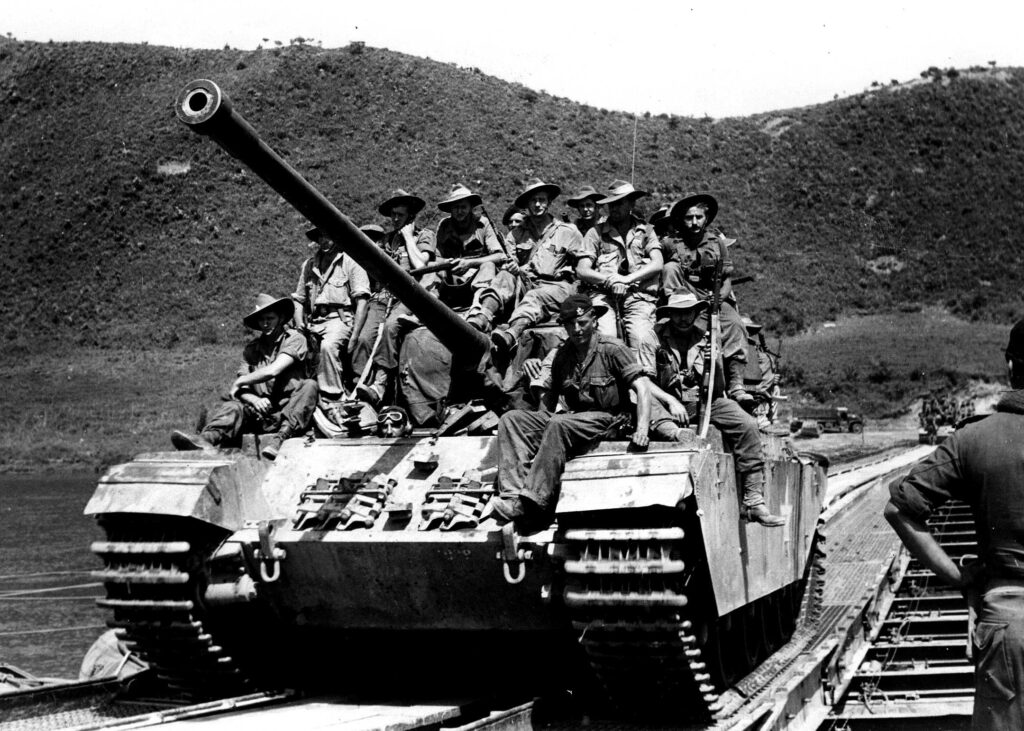
Hostilities began with a mass attack by North Korean troops across the 38th Parallel, the border between north and south, on June 25th, 1950. Sweeping all before it, most of the south fell, leaving the UN forces trapped behind a shrinking perimeter around the southern city of Pusan.
With the landing of US forces under Macarthur at Inchon, the strategic situation was reversed with the North Koreans driven back north of Pyongyang. The intervention of Chinese troops pushed the UN Forces back again before a counterattack in early 1951 drove the Chinese and North Koreans back to the 38th Parallel.
The war turned into a brutal slugging match with superior western weaponry ranged against human wave offensives staged by the North Koreans and Chinese.
Tank on tank engagements were few and far between with a large number of the North’s ageing fleet of ex-Soviet T-34s destroyed during the “Battle of the Bowling Alley”, a steep narrow valley on the Pusan perimeter.
Tanks – US Shermans and Pershings, British Centurions – did find considerable battlefield use supporting infantry and using their main armament in a fire support role.
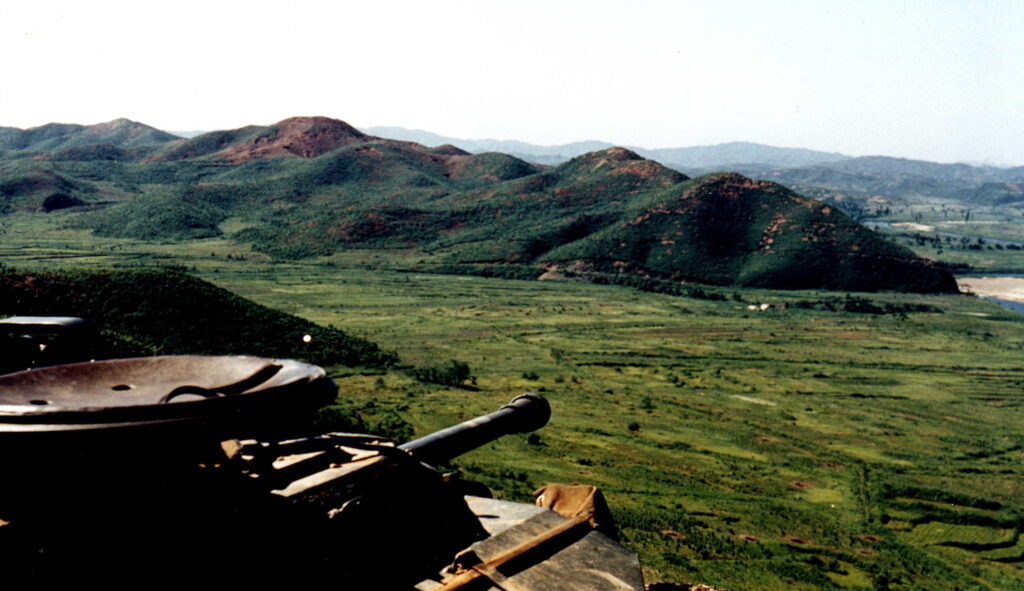
Conditions in Korea were extremely harsh. The terrain was mountainous with deep river valleys and to quote Trooper Jarlath Donellan of 1/RTR “there’s an arctic winter, a tropical summer and a monsoon season and the place is infested with snakes, frogs and crickets”.
In winter, temperatures could reach -40⁰. Vehicle engines had to be run constantly to stop them freezing and tanks parked on straw to stop the tracks freezing to the ground.
At the Battle of the Imjin River, fought on 22-25 April 1951, a UN Force including troops from the Gloucestershire Regiment fought a desperate action against overwhelming numbers of Chinese.
The “Glosters” fought off repeated attacks on Hill 235 until out of ammunition and overrun. This action halted the Chinese offensive for long enough for new defensive positions to be prepared and halted the enemy advance on Seoul.
British Centurion Mk III tanks played a decisive role in three battles fought on The Hook, a tactically important ridge near Panmunjon.
At the Third Battle of The Hook in May 1953, Centurions of C Squadron, 1/RTR, in support of infantry from the Duke of Wellington’s Regiment, operating from hull down positions, fired over 500 rounds of 20 Pounder ammunition and 22,000 rounds from their coaxial machine guns, breaking up human wave assaults while surviving artillery and mortar fire.
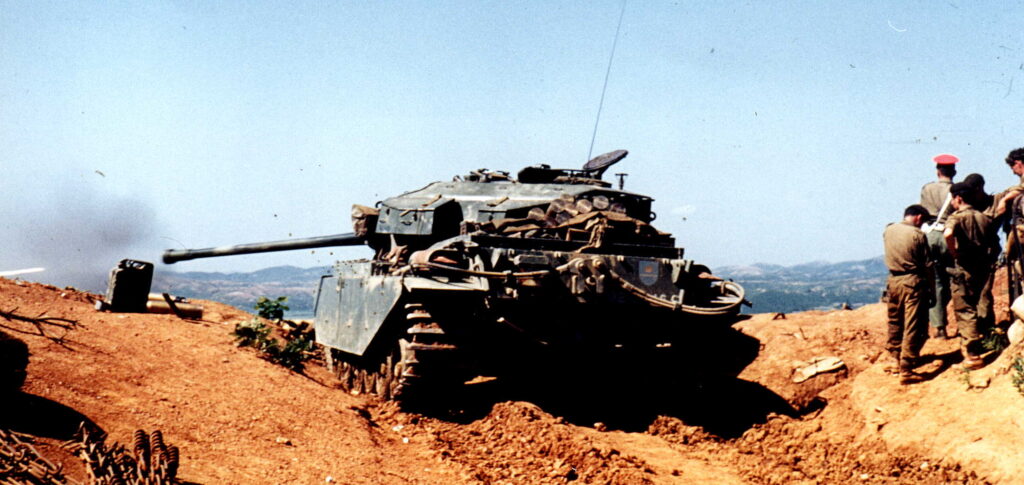
In hill fighting operations such as this and the Australian action at Maryang San, tanks were forced to hose one another down with machine gun fire to remove enemy infantry from the outside of the vehicle.
A ceasefire finally came into effect on July 27, 1953 although a peace treaty has never been signed.
Korea remains divided by the Demilitarised Zone (DMZ) near the 38th Parallel, an uneasy truce have been observed for the last seventy-three years.