The story of Operation Battleaxe and the Crusader’s first action in Spring 1941.
A New Tank
The situation facing British forces in North Africa was not great in Spring 1941. While the Italians had been comprehensively defeated during Operation Compass, German forces under Rommel had since deployed to the theatre and had pushed the British back to the Egyptian Border.
One of the more pressing concerns was the lack of modern armour – or armour of any description. The usual convoy route of going around the bottom tip of Africa and up to the Red Sea would take far too long to get urgently needed reinforcements into the fight. So, a rather more direct and much riskier route of just sailing straight through the Mediterranean was planned to get its cargo of planes, tanks and extra supplies to Egypt.
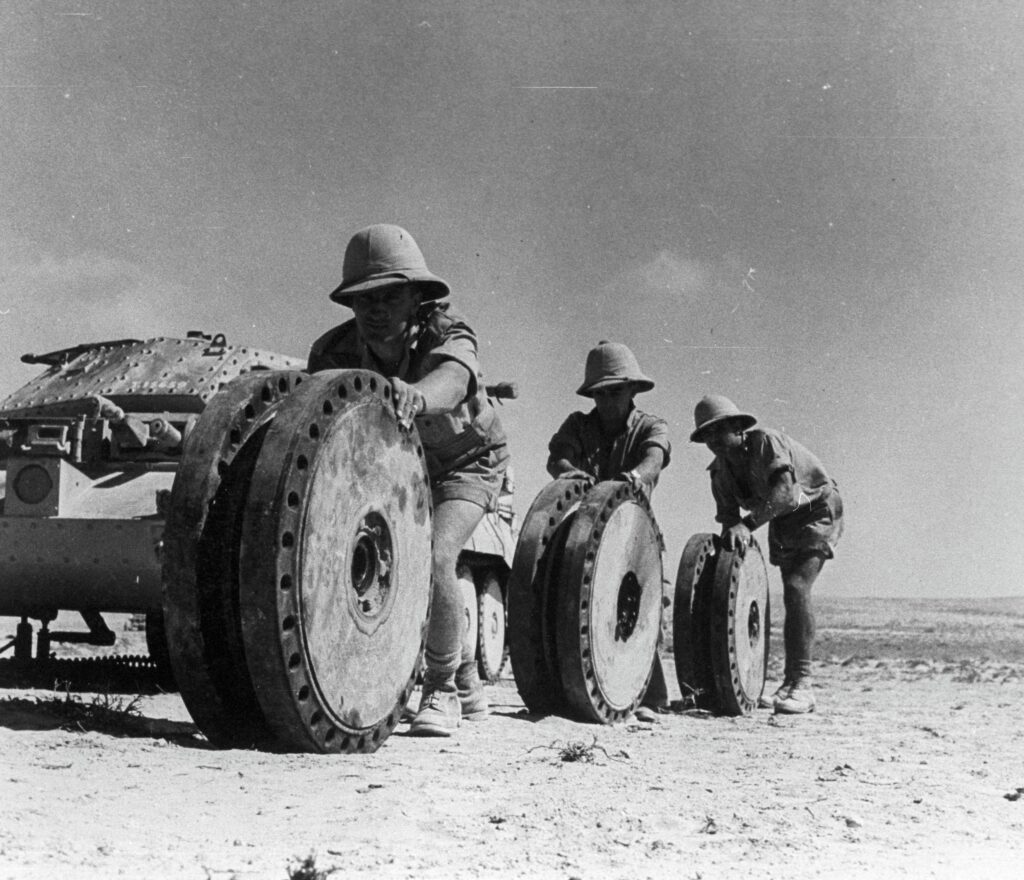
The gamble paid off – the majority of the convoy made it to Alexandria.
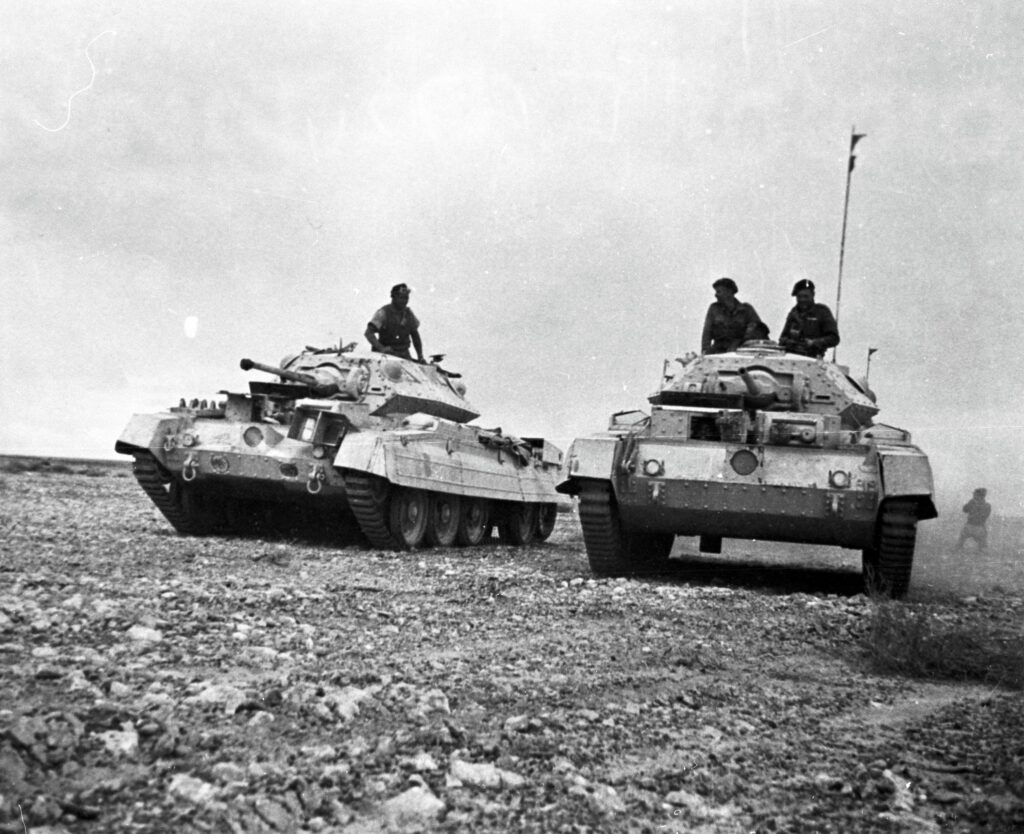
6th Battalion, Royal Tank Regiment were the first unit to receive the newest tank in the British arsenal, officially called ‘Tank, Cruiser, Mk VI, Crusader’. 6RTR would operate alongside 2RTR in 7th Armoured Brigade.
The Plan
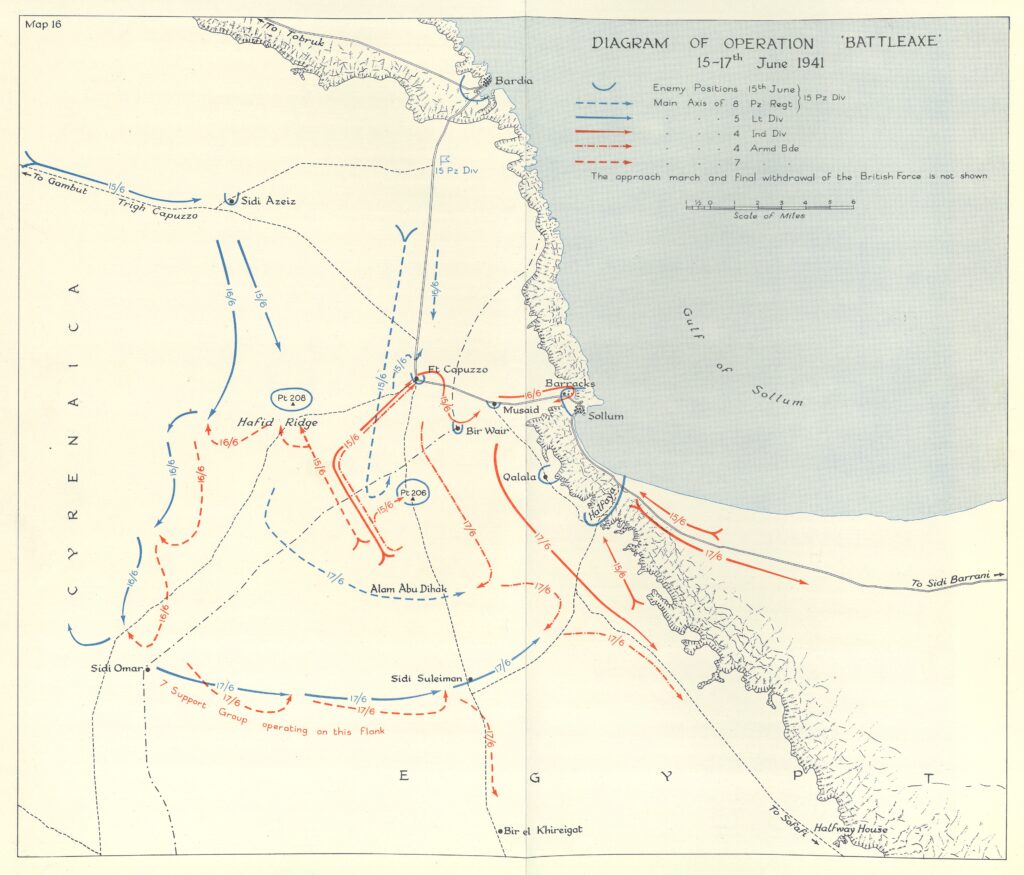
Operation Battleaxe, as it was called, was intended to take a number of key objectives to open up the road to the besieged port city of Tobruk. The Germans held three main positions that would need to be dealt with; Halfaya Pass on the operation’s right flank, Fort Capuzzo in the centre and Hafid Ridge on the left.
7th Armoured Brigade were tasked with the capture of Hafid Ridge – which is importantly actually three ridges! 2RTR would lead the assault in their older cruisers (mainly A9s and A10s but they did have a few A13s) with 53 Crusaders of 6RTR being held in reserve in order to keep the existence of the Crusader a secret until it could be used to decisive effect.
The First Day
Battleaxe kicked off in the early hours of 15th June 1941.
The morning was pretty uneventful for the Crusaders with orders coming in from Brigade HQ at 1130 that stated if enemy tanks were to appear 6RTR would have to intervene.
From then on, it was anything but uneventful.
Just under an hour later, B Squadron was ordered to move up and support 2RTR, who had reported the enemy guns had been over-run, in mopping up operations around Hafid Ridge. But as the Squadron moved up, they came under heavy shelling, could not contact 2RTR, lost two tanks almost instantly and were ordered to fall back.
By 1330, around 40 enemy tanks had been spotted forming up behind Hafid – the inevitable German counterattack was coming so if Hafid was to be taken, it was going to have to be soon!
At quarter to five, the regiment was told to form up and seize the ridges. And 45 minutes later Brigade, clearly getting a tad impatient, issued the signal; “Get on with the attack now.”
A Squadron was first to be in contact. While operating in line ahead, they engage what turned out to be a dummy camp but as they moved north-east, they duelled with both tanks and dug-in anti-tank guns.
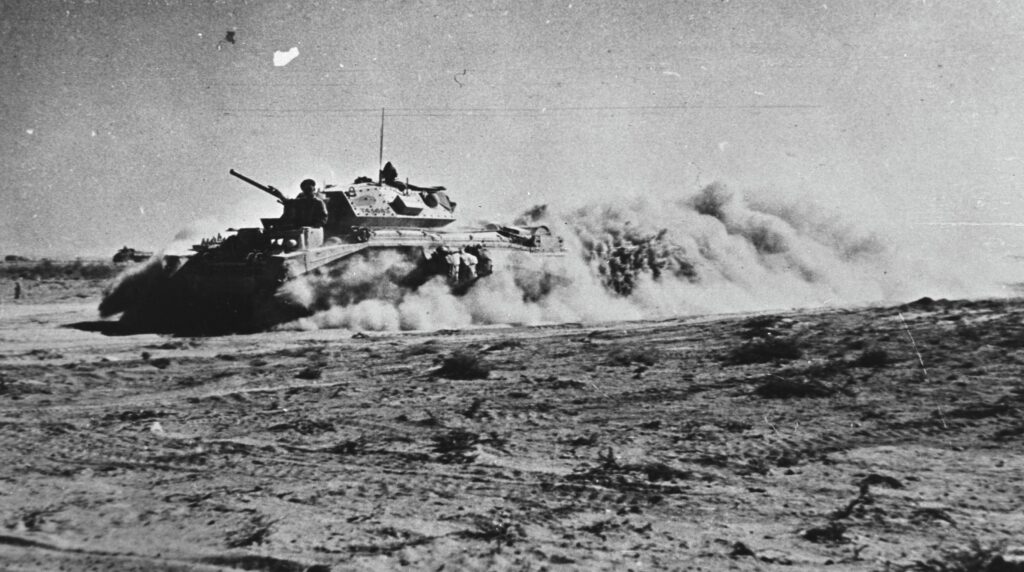
Still in line ahead they engaged more tanks coming from the north-east. And according to their war diary “the Sqn after a good broadside shoot, which was carried out at speed, withdrew westwards.” Yes, I can assure you we are not talking about naval warfare!
While all this was happening, B Squadron assaulted the Ridge itself. But as they crossed some dead ground and after cresting a rise, they came under extremely heavy anti-tank fire from very close range – sometimes as close as 300 yards.
Six tanks were lost almost instantly with two more being knocked out just before this action. The remaining six Crusaders picked up what crews they could and formed up with C Squadron.
By the end of the day the whole of 6RTR had only 20 Crusaders (from 53 at the start of the day) in operation and was down to two functional squadrons.
16th and 18th June
Over the next two days 7th Armoured Brigade had a series of running battles towards the south as Rommel counter attacked along most the of line. The remaining 20 Crusaders were whittled down to just nine by the time 7th Armoured Brigade was withdrawn in the early hours of 18th June.
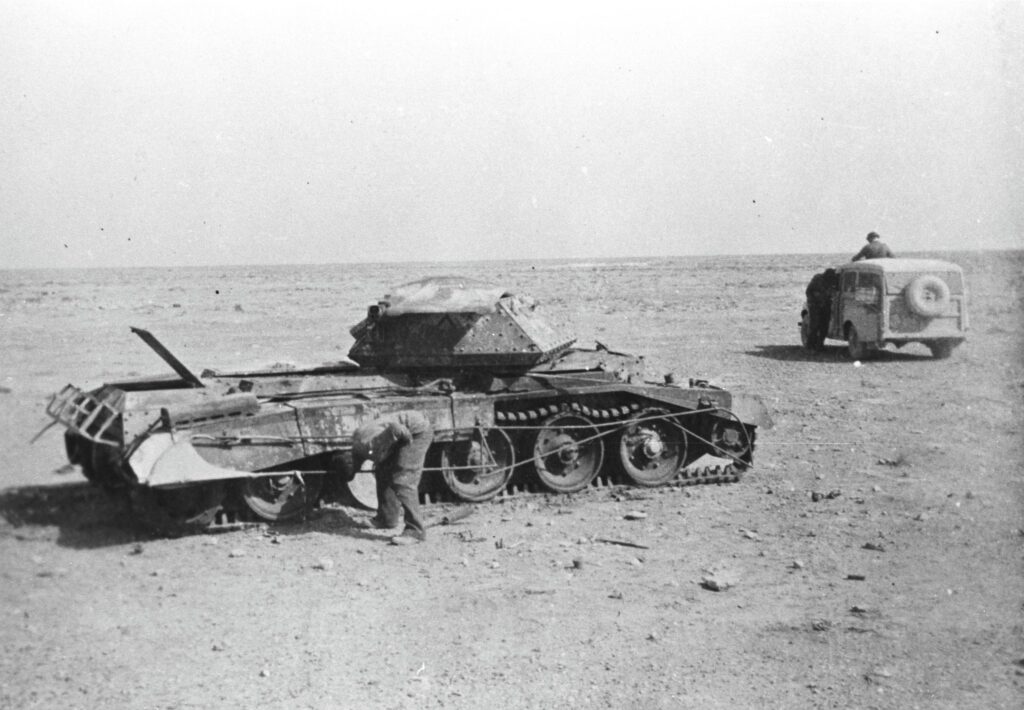
The Aftermath
This clearly was not a successful debut for the Crusader. But the question has to be asked if any of it was down to any failing of the new cruisers or was it just a terribly planned and executed operation?
Field Marshal Carver in his history of 4th Armoured Brigade didn’t exactly hold back with his criticism: “It was a complete failure . . . and only saved from turning into disaster by the brilliant work of 4 RHA.” – 4th Royal Horse Artillery were the main artillery support for the operation.
The theatre commander, Archibald Wavell, said in his dispatch to London;
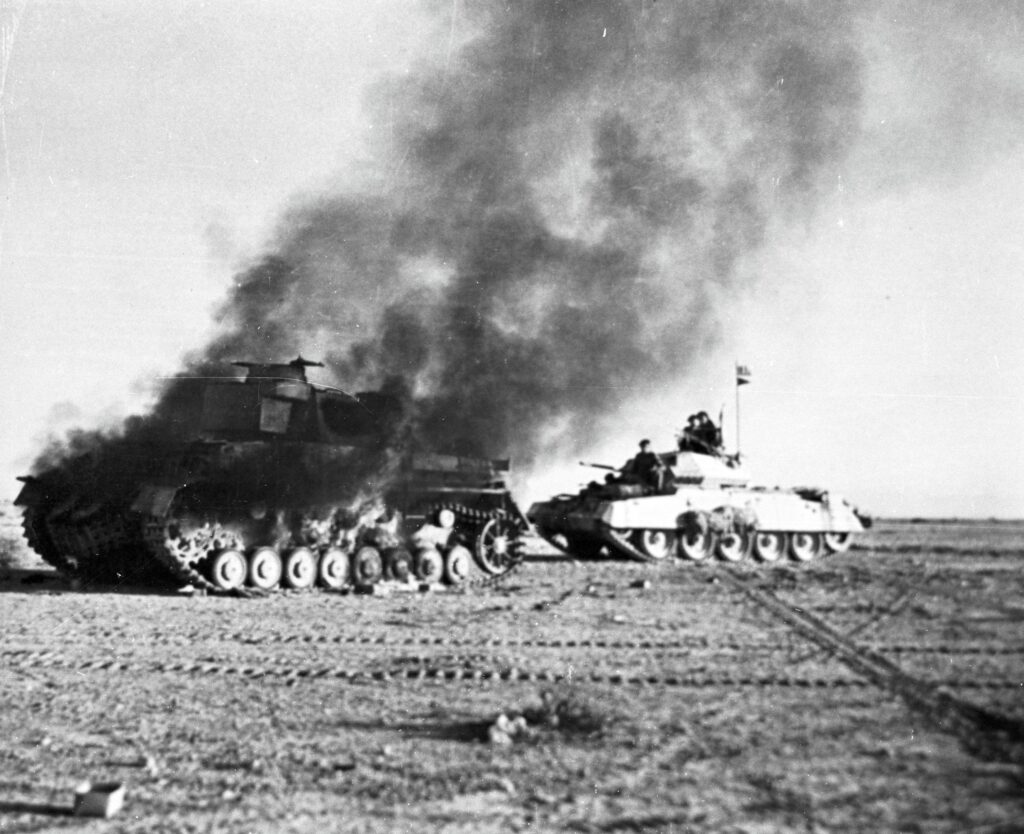
“The main cause of our failure was undoubtedly the difficulty in combining the action of cruiser and ‘I’ tanks, the cramping effect on manoeuvre of having only two regiments in each armoured brigade and the lack of training in the 7th Armoured Division.”
One thing that was becoming clear was even in June 1941, the 2pdr was not an ideal weapon for desert warfare – the Crusaders were outgunned at range by both the German tank and anti-tank guns, and with no high explosive round available, actually suppressing the formidable gun lines was proving near impossible.