Conqueror was the British Army’s last heavy tank. In the early 1950s the British were concerned that the Soviet IS-3 heavy tank, and whatever replaced it, could destroy their primary tank, the Centurion, at longer ranges than it could respond.
To deal with this threat Conqueror had thicker armour and a longer ranged and more powerful gun than Centurion. Its design stemmed from the A45 Universal Tank from 1944. This was cancelled, but its hull was used in another failed project called FV201. This was then fitted with a larger turret with a bigger gun, becoming the FV214 Conqueror.
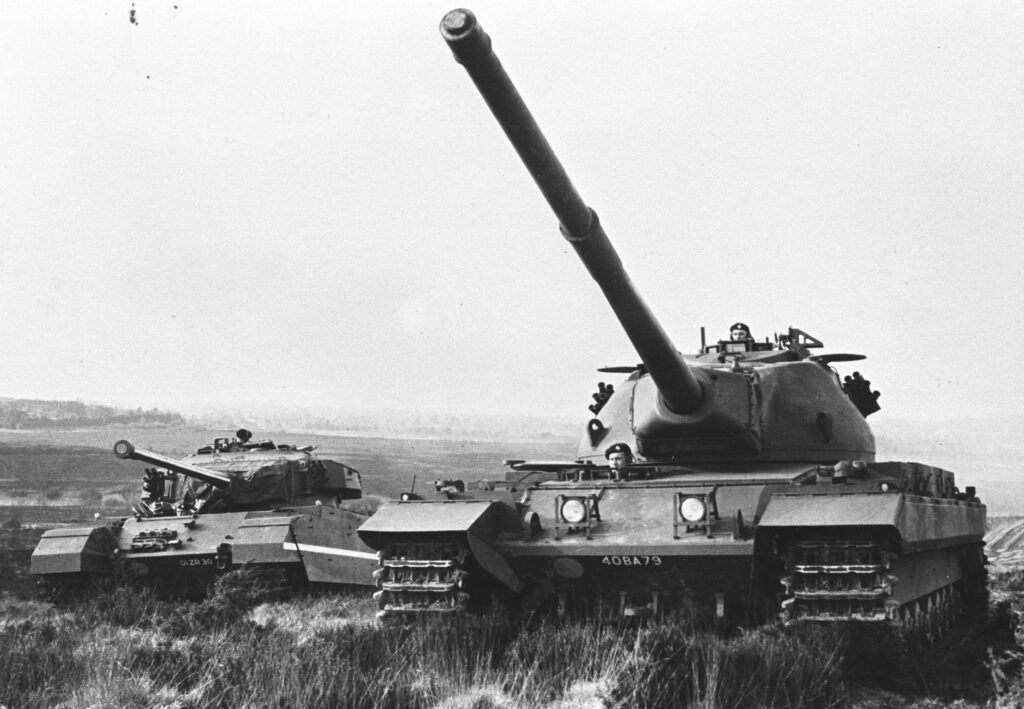
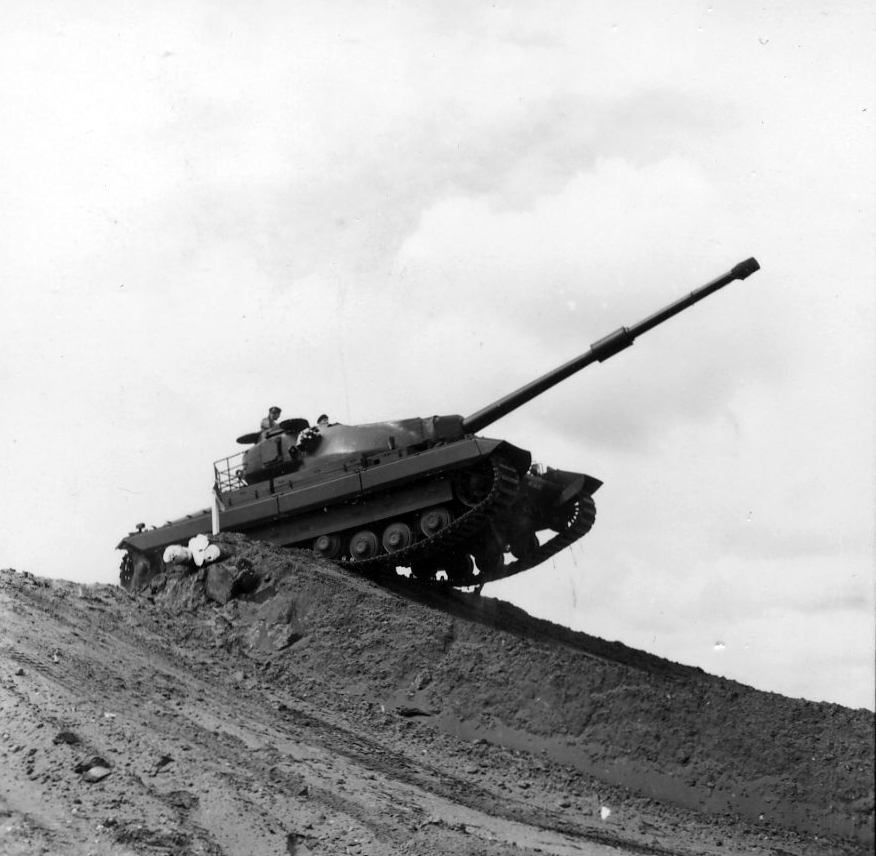
It entered service from 1955. Despite weighing 15 tonnes more than Centurion it was not much less mobile, and it could even be faster on good ground. However, its greater size and weight meant journeys had to be planned carefully – tight bends and bridges with weight restrictions would cause Conqueror problems that the Centurion crews accompanying them didn’t have to worry about.
There were also cultural issues. Many soldiers took the attitude that as a tank, Conqueror could be used and treated in the same way as Centurion. In fact, it had a different role and different maintenance requirements. This meant it had to be operated differently; however, this didn’t always happen.
On the other hand, the 120mm L1 gun was extremely powerful, and crews were confident that it could destroy Soviet heavy tanks at long range. Its main problem was the automatic system that ejected the spent brass shell case after firing. It was unreliable. If it failed it could take the crew up to five minutes to eject a case by hand.
The Conqueror was used in small numbers. On paper each Armoured Regiment would have nine, organised as one Troop of three in each of its Squadrons.
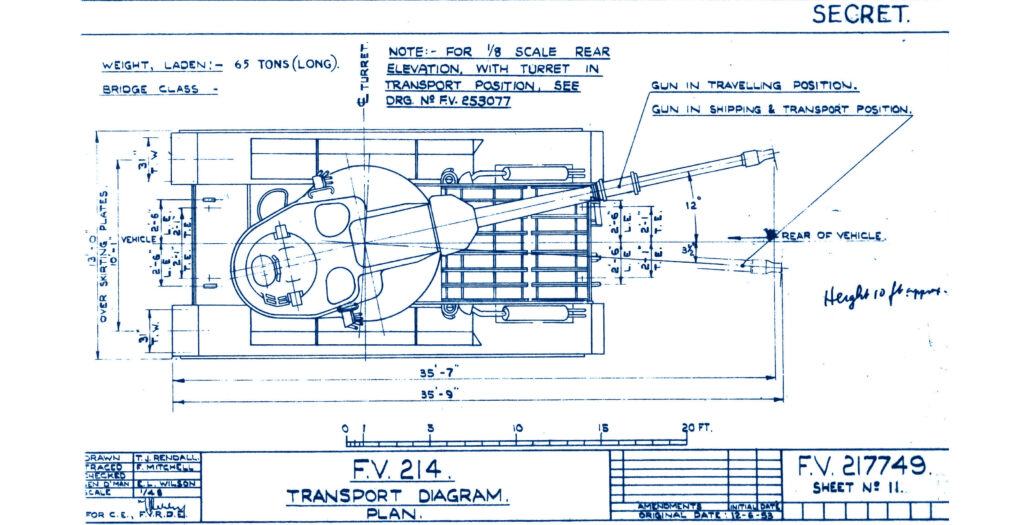
Some regiments tried different combinations. Working out the best way to use it was also an issue throughout its service. Conqueror had a short life. The development of the 105mm L7 gun in the late 1950s meant that Centurion could be fitted with a weapon which could deal with the IS-3 and its successors, and this tank had none of the problems of the Conqueror. As a result, Conqueror was retired by 1966.
40 BA 81
This Conqueror has registration 40 BA 81. It is a Mark 1, and it was built at the Royal Ordnance Factory in Dalmuir, on Clydeside to the north-west of Glasgow. A total of 159 Conquerors were built, with just 20 being Mark 1s. 40 BA 81 was one of the very first, part of a batch of five that were handed over to the Army on 18th March 1955. It is believed to be the second tank built.
To begin with it was used for troop trials with the British Army of the Rhine in West Germany. These were intended to identify issues that might arise when the tank was being used by soldiers in the field, as opposed to the more controlled conditions at test establishments.
After this 40 BA 81 was kept by BAOR, although there is no record of which Regiments operated it. It was returned to the UK in mid-1966, when Conqueror was withdrawn from service, and that November was sent to the Fighting Vehicles Research and Development Establishment at Chertsey. It was officially struck off the Army’s books in October 1975 but continued in use.
At some point it was passed on to the Military Vehicles and Engineering Establishment at Christchurch in Dorset, where it was used as a tug.
At some point during this period 40 BA 81’s original turret was replaced with a Windsor turret. This was simply a circular weight with no gun or systems. It could have extra weights added or removed and could be used to simulate the effect of different systems on the vehicle’s mobility.
In 1985 40 BA 81 was donated to The Tank Museum. By this time, it had been fitted with tracks from a Chieftain tank, presumably because its originals had worn out or broken and they were all that was available.

It went on loan to the Imperial War Museum at Duxford in 1989, before returning to Bovington in the late 1990s.
In 2025 it was decided to restore 40 BA 81 to running order. Mr Hewes, who restored The Tank Museum’s FV4005, will be carrying out the work. The plan includes replacing the Windsor turret with an original Conqueror turret, that is currently on a firing range, so the end result will be a running example of Britain’s last and most powerful heavy tank.